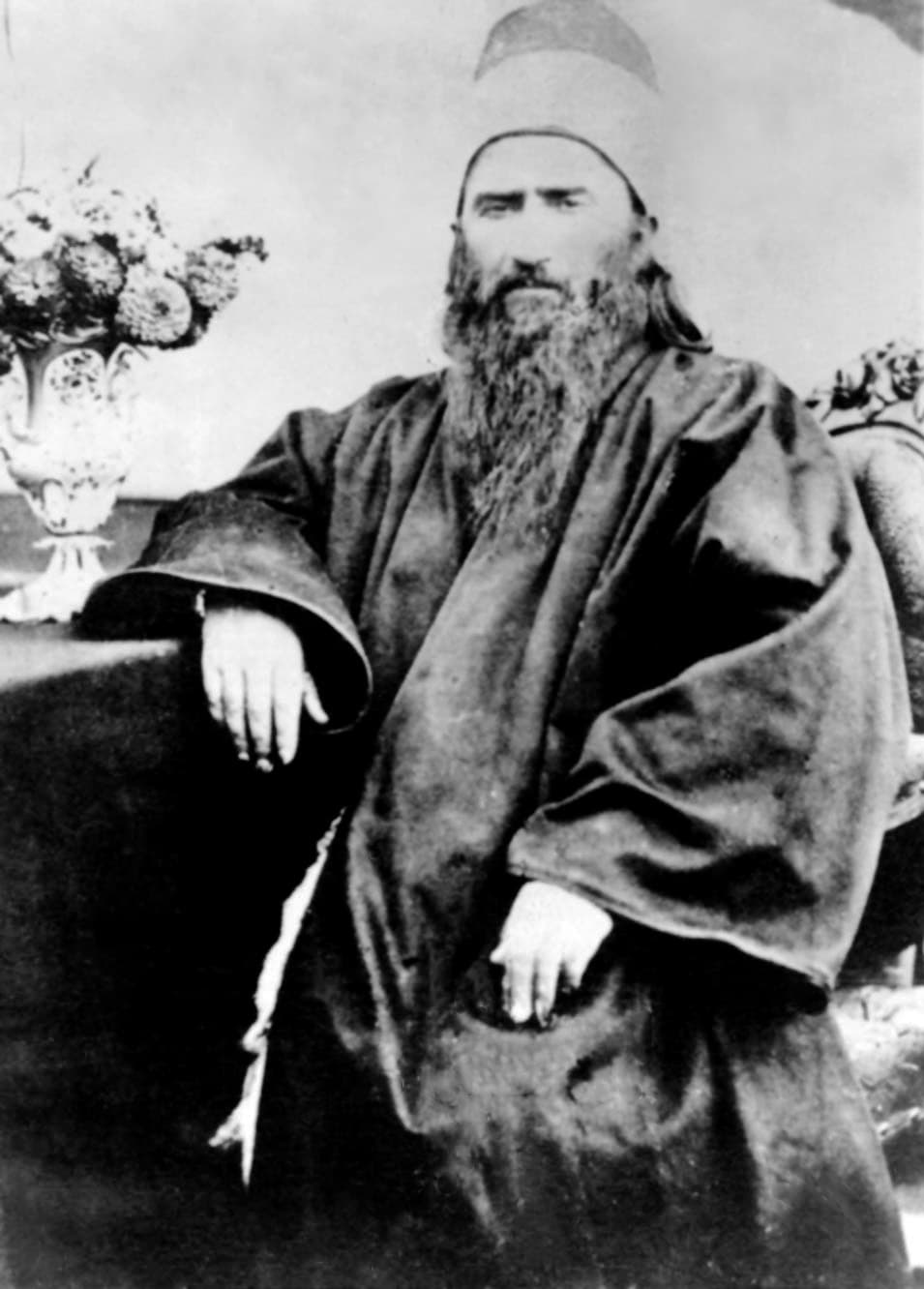
Who He Was
Baháʼu'lláh (Persian: [bæhɒːʔolːɒːh], born Ḥusayn-ʻAlí; 12 November 1817 – 29 May 1892) was an Iranian religious leader who founded the Baháʼí Faith. He was born to an aristocratic family in Iran and was exiled due to his adherence to the messianic Bábism. In 1863, in Ottoman Iraq, he first announced his claim to a revelation from God. He spent the rest of his life in further imprisonment in the Ottoman Empire. His teachings revolved around the principles of unity and religious renewal, ranging from moral and spiritual progress to world governance. Baháʼu'lláh was raised with no formal education but was well-read and devoutly religious. His family was considerably wealthy, and at the age of 22 he turned down a position in the government, instead managing family properties and donating time and money to charities. At the age of 27 he accepted the claim of the Báb and became one of the most outspoken supporters of the new religious movement which advocated, among other things, abrogation of Islamic law, which attracted heavy opposition. At the age of 33, during a governmental attempt to exterminate the movement, Baháʼu'lláh narrowly escaped death, his properties were confiscated, and he was banished from Iran. Just before leaving, while imprisoned in the Síyáh-Chál dungeon, Baháʼu'lláh claimed to receive revelations from God marking the beginning of his divine mission. After settling in Iraq, Baháʼu'lláh again attracted the ire of Iranian authorities, and they requested that the Ottoman government move him farther away. He spent months in Constantinople where the authorities became hostile to his religious claims and put him under house arrest in Edirne for four years, followed by two years of harsh confinement in the prison-city of Acre. His restrictions were gradually eased until his final years were spent in relative freedom in the area surrounding Acre. Baháʼu'lláh wrote at least 1,500 letters, some book-length, that have been translated into at least 802 languages. Some notable examples include the Hidden Words, the Kitáb-i-Íqán, and the Kitáb-i-Aqdas. Some teachings are mystical and address the nature of God and the progress of the soul, while others address the needs of society, religious obligations of his followers, or the structure of Bahá’í institutions that would propagate the religion. He viewed humans as fundamentally spiritual beings and called upon individuals to develop divine virtues and further the material and spiritual advancement of society. Baháʼu'lláh died in 1892 near Acre. His burial place is a destination for pilgrimage by his followers, known as Bahá’ís, who now reside in 236 countries and territories and number between 5 and 8 million. Baháʼís regard Baháʼu'lláh as a Manifestation of God in succession to others like Buddha, Jesus, or Muhammad. Recognized in: Baháʼí Faith.
Founder of the Baháʼí Faith, regarded by its followers as the most recent in a line of Manifestations of God.
Birth and Early Life
Traditional and historical sources place Baháʼu'lláh in the era of 1817–1892 CE. Where such dates are traditional, mythic, or disputed rather than historically established, they should be read as the tradition's own reckoning rather than confirmed chronology.
His Calling / Mission
The scriptures and traditions of Baháʼí Faith describe the calling and mission of Baháʼu'lláh; the key passages are listed under Sacred Texts and Scripture below.
Religion and Teachings
Baháʼu'lláh is honored within Baháʼí Faith. Founder of the Baháʼí Faith, regarded by its followers as the most recent in a line of Manifestations of God. His teaching and significance are set out in the sacred texts that record his life.
Sacred Texts and Scripture
Scriptural references: the Kitáb-i-Aqdas and the Kitáb-i-Íqán
Major Accomplishments and Events
The account of Baháʼu'lláh's life, works, and significance is preserved in the scriptures cited above and in the living tradition of Baháʼí Faith.
Death and Legacy
Baháʼu'lláh is remembered across Baháʼí Faith as one of the foundational figures of faith, and continues to be honored in scripture, devotion, and scholarship. Source: Wikipedia
Scripture References
the Kitáb-i-Aqdas and the Kitáb-i-Íqán
Sources & Notes
Wikipedia: https://en.wikipedia.org/wiki/Bah%C3%A1%CA%BCu'll%C3%A1h
Discussion
Discussion
No comments yet
Start the discussion — sign in to leave a comment.
Join the Discussion
Join the discussion
Sign in to leave a comment or review.
Sign InorCreate an account