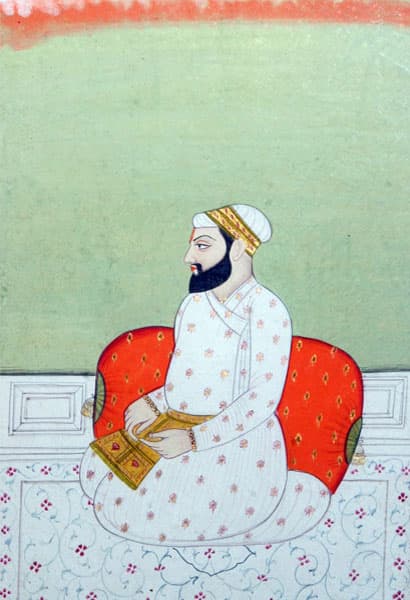
Who He Was
Guru Arjan (Gurmukhi: ਗੁਰੂ ਅਰਜਨ, pronunciation: [gʊɾuː əɾd͡ʒənᵊ]; 15 April 1563 – 30 May 1606) was the fifth of the ten Sikh Gurus. He compiled the first official edition of the Sikh scripture called the Adi Granth, which later expanded into the Guru Granth Sahib. He is regarded as the first of the two Gurus martyred in the Sikh faith. He is credited for founding the settlements of Kartarpur (Jalandhar district), Hargobindpur, and Tarn Taran. Guru Arjan was born in Goindval, in the Punjab, the youngest son of Bhai Jetha, who later became Guru Ram Das, and Mata Bhani, the daughter of Guru Amar Das. He completed the construction of the Darbar Sahib at Amritsar, after the fourth Sikh Guru, his father, had founded the town and built a sarovar. Arjan compiled the hymns of previous Gurus and of other saints into the Adi Granth, the first edition of the Sikh scripture, and installed it in the Harimandir Sahib. Guru Arjan reorganized the Masand system initiated by Guru Ram Das by suggesting that Sikhs donate, if possible, one-tenth of their income, goods or service to the Sikh organization (a practice known as dasvandh). The Masand was an individual who not only collected these funds but also taught tenets of Sikhism and settled civil disputes in their region, similar to a vicar or parish priest in Christianity. The dasvandh financed the building of gurdwaras and langars (shared communal kitchens). Guru Arjan was arrested under the orders of the Mughal Emperor Jahangir, who accused him of supporting a rebellion under Khusrau Mirza. After refusing to convert to Islam, Arjan was tortured and executed in 1606. Historical records and the Sikh tradition are unclear as to whether Arjan was executed by drowning or died during torture. The Sikh tradition states the Guru's execution was a part of the ongoing persecution of the Sikhs under the Mughal Empire. His martyrdom is considered a watershed event in the history of Sikhism. It is remembered as Shaheedi Divas of Guru Arjan in May or June according to the Nanakshahi calendar released by the Shiromani Gurdwara Parbandhak Committee in 2003. Recognized in: Sikhism.
The fifth Sikh Guru, who compiled the Ādi Granth and is revered as the first martyr of the Sikh faith.
Birth and Early Life
Traditional and historical sources place Guru Arjan in the era of 1563–1606 CE. Where such dates are traditional, mythic, or disputed rather than historically established, they should be read as the tradition's own reckoning rather than confirmed chronology.
His Calling / Mission
The scriptures and traditions of Sikhism describe the calling and mission of Guru Arjan; the key passages are listed under Sacred Texts and Scripture below.
Religion and Teachings
Guru Arjan is honored within Sikhism. The fifth Sikh Guru, who compiled the Ādi Granth and is revered as the first martyr of the Sikh faith. His teaching and significance are set out in the sacred texts that record his life.
Sacred Texts and Scripture
Scriptural references: the Gurū Granth Sāhib (Ādi Granth, which he compiled)
Major Accomplishments and Events
The account of Guru Arjan's life, works, and significance is preserved in the scriptures cited above and in the living tradition of Sikhism.
Death and Legacy
Guru Arjan is remembered across Sikhism as one of the foundational figures of faith, and continues to be honored in scripture, devotion, and scholarship. Source: Wikipedia
Scripture References
the Gurū Granth Sāhib (Ādi Granth, which he compiled)
Sources & Notes
Wikipedia: https://en.wikipedia.org/wiki/Guru_Arjan
Discussion
Discussion
No comments yet
Start the discussion — sign in to leave a comment.
Join the Discussion
Join the discussion
Sign in to leave a comment or review.
Sign InorCreate an account