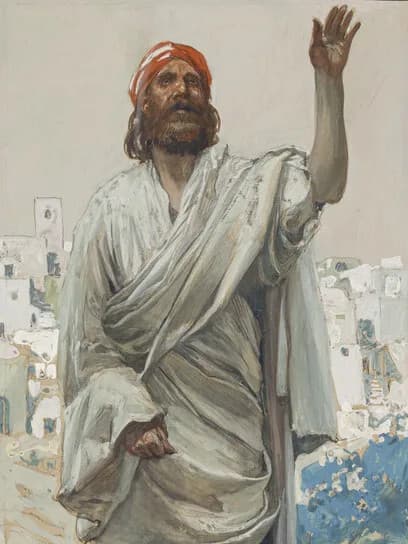
Who He Was
In the Hebrew Bible, Hosea ( hoh-ZEE-ə or hoh-ZAY-ə; Hebrew: הוֹשֵׁעַ, romanized: Hōšēaʿ, lit. 'Salvation'), also known as Osee (Ancient Greek: Ὡσηέ, romanized: Hōsēé), son of Beeri, was an 8th-century BC prophet in Israel and the nominal primary author of the Book of Hosea. He is the first of the Twelve Minor Prophets, whose collective writings were aggregated and organized into a single book in the Jewish Tanakh by the Second Temple period (forming the last book of the Nevi'im) but which are distinguished as individual books in Christianity. Hosea is often seen as a "prophet of doom", but underneath his message of destruction is a promise of restoration. The Talmud claims that he was the greatest prophet of his generation. The period of Hosea's ministry extended to some sixty years, and he was the only prophet of Israel of his time who left any written prophecy. Most scholars since the nineteenth and twentieth centuries have agreed on the contemporaneous dating of Hosea and the Book of Hosea to the time of Jeroboam II, although some redaction-critical studies of Hosea since the 1980s have postulated that the theological and literary unity was created by editors, and scholars differ significantly in their interpretations of the redaction process, stages, and the extent of the eighth-century prophet’s original contributions. Nevertheless, aspects of eighth-century history are generally considered to be reflected in the text. Recognized in: Judaism, Christianity.
Birth and Early Life
Traditional and historical sources place Hosea in the era of 8th century BCE. Where such dates are traditional, mythic, or disputed rather than historically established, they should be read as the tradition's own reckoning rather than confirmed chronology.
His Calling / Mission
The scriptures and traditions of Judaism, Christianity describe the calling and mission of Hosea; the key passages are listed under Sacred Texts and Scripture below.
Religion and Teachings
Hosea is honored within Judaism, Christianity. His teaching and significance are set out in the sacred texts that record his life.
Sacred Texts and Scripture
Scriptural references: the Book of Hosea
Major Accomplishments and Events
The account of Hosea's life, works, and significance is preserved in the scriptures cited above and in the living tradition of Judaism, Christianity.
Death and Legacy
Hosea is remembered across Judaism, Christianity as one of the foundational figures of faith, and continues to be honored in scripture, devotion, and scholarship. Source: Wikipedia
Scripture References
the Book of Hosea
Sources & Notes
Wikipedia: https://en.wikipedia.org/wiki/Hosea
Discussion
Discussion
No comments yet
Start the discussion — sign in to leave a comment.
Join the Discussion
Join the discussion
Sign in to leave a comment or review.
Sign InorCreate an account