Who He Was
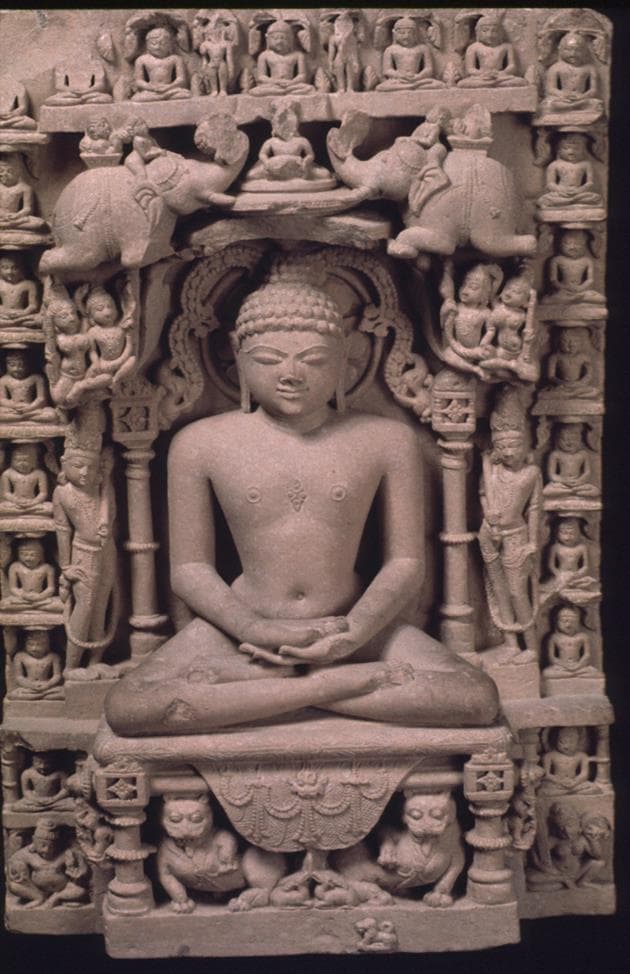
Mahavira (Mahāvīra), also known by his birth name Vardhamana (Vardhamāna), was an Indian religious reformer and spiritual leader, considered by Jains to be the 24th and final Tirthankara (Supreme Preacher) in the current time cycle of Jain cosmology. He is believed by historians to have lived in the 6th or 5th century BCE, reviving and reforming an earlier Jain or proto-Jain community which had likely been led by Pārśvanātha, whom Jains consider to be Mahavira's predecessor. Although the dates of Mahavira's life are uncertain and historically reliable information is scarce, and traditional accounts vary by sectarian traditions, the historicity of Mahavira is well-established and not in dispute among scholars. According to traditional legends and hagiographies, Mahavira was born in 599 BCE to a ruling royal kshatriya Jain family of the Nāya tribe in what is now Bihar in India. According to traditional sources like the Ācārāṅga Sūtra, the Nāyas were followers of Parshvanatha, Mahavira's predecessor. Mahavira abandoned all worldly possessions at the age of about 30 and left home in pursuit of spiritual awakening, becoming an ascetic. Mahavira practiced intense meditation and severe austerities for twelve and a half years, after which he attained Kevala Jnana (omniscience). He preached for 30 years and attained moksha (liberation) when he died. Mahavira taught attainment of samyak darshan or self realization (atma-anubhuti) through the practice of bhedvijnāna, which involves positioning oneself as a pure soul, separate from body, mind and emotions, and being aware of the soul's true nature; and to remain grounded and steadfast in soul's unchanging essence during varying auspicious or inauspicious external circumstances. He also preached that the observance of the vows of ahimsa (non-violence), satya (truth), asteya (non-stealing), brahmacharya (chastity), and aparigraha (non-attachment) are necessary for spiritual liberation. He taught the principles of Anekantavada (many-sided reality): syadvada and nayavada. Mahavira's teachings were compiled by Indrabhuti Gautama (his chief disciple) as the Jain Agamas. The texts, transmitted orally by Jain monks, are believed to have been largely lost by about the 1st century CE. Mahavira is usually depicted in a sitting or standing meditative posture, with the symbol of a lion beneath him. His earliest iconography is from archaeological sites in the North Indian city of Mathura, and is dated from between the 1st century BCE and the 2nd century CE. His birth is celebrated as Mahavira Janma Kalyanaka while his nirvana (liberation) and attainment of Kevala jnana (omniscience) by Gautama Swami are observed by Jains as Diwali. Recognized in: Jainism.
The 24th and last Tirthankara of this age — a supreme teacher and reformer of Jainism, not a 'prophet' in the Abrahamic sense.
Birth and Early Life
Traditional and historical sources place Mahavira in the era of c. 599–527 BCE (traditional). Where such dates are traditional, mythic, or disputed rather than historically established, they should be read as the tradition's own reckoning rather than confirmed chronology.
His Calling / Mission
The scriptures and traditions of Jainism describe the calling and mission of Mahavira; the key passages are listed under Sacred Texts and Scripture below.
Religion and Teachings
Mahavira is honored within Jainism. The 24th and last Tirthankara of this age — a supreme teacher and reformer of Jainism, not a 'prophet' in the Abrahamic sense. His teaching and significance are set out in the sacred texts that record his life.
Sacred Texts and Scripture
Scriptural references: the Jain Āgamas
Major Accomplishments and Events
The account of Mahavira's life, works, and significance is preserved in the scriptures cited above and in the living tradition of Jainism.
Death and Legacy
Mahavira is remembered across Jainism as one of the foundational figures of faith, and continues to be honored in scripture, devotion, and scholarship. Source: Wikipedia
Scripture References
the Jain Āgamas
Sources & Notes
Wikipedia: https://en.wikipedia.org/wiki/Mahavira
Discussion
Discussion
No comments yet
Start the discussion — sign in to leave a comment.
Join the Discussion
Join the discussion
Sign in to leave a comment or review.
Sign InorCreate an account