Who He Was
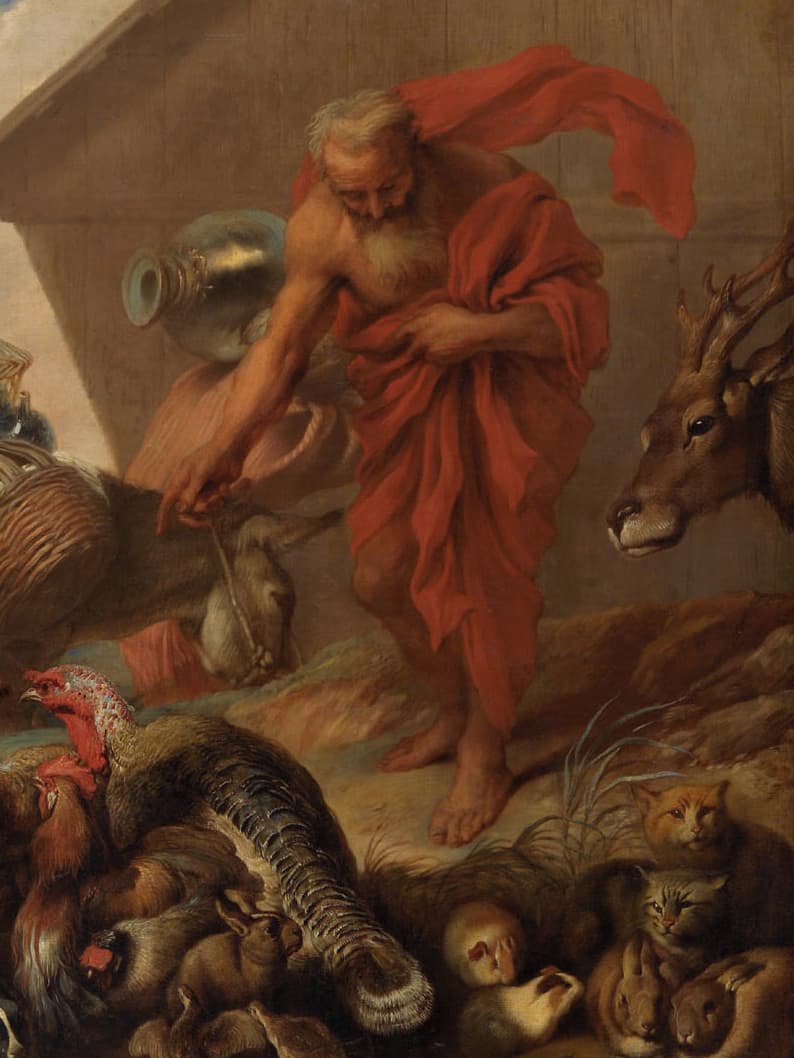
Noah (; Hebrew: נֹחַ, romanized: Nōaḥ, lit. 'rest' or 'consolation', also Noach) appears as the last of the Antediluvian patriarchs in the traditions of Abrahamic religions. His story appears in the Hebrew Bible (Book of Genesis, chapters 5–9), the Quran and Baha'i writings, and extracanonically. The Genesis flood narrative is among the best-known stories of the Bible. In this account, God decides to punish the evil ones. Noah then labors faithfully to build the Ark at God's command, ultimately saving not only his own family, but mankind itself and all land animals, from extinction during the Flood. Afterwards, God makes a covenant with Noah and promises never again to destroy the earth with a flood. Noah is also portrayed as a "tiller of the soil" who is the first to cultivate the vine. After the flood, God commands Noah and his sons to "be fruitful, and multiply, and replenish the earth." The story of Noah in the Pentateuch is similar to the flood narrative in the Mesopotamian Epic of Gilgamesh, composed around 1800 BC, where a hero builds an ark to survive a divinely sent flood. Scholars suggest that the biblical account was influenced by earlier Mesopotamian traditions, with notable parallels in plot elements and structure. Comparisons are also drawn between Noah and the Greek hero Deucalion, who, like Noah, is warned of a flood, builds an ark, and sends a bird to check on the flood's aftermath. Recognized in: Islam, Christianity, Judaism.
Birth and Early Life
Traditional and historical sources place Noah in the era of Antediluvian (traditional). Where such dates are traditional, mythic, or disputed rather than historically established, they should be read as the tradition's own reckoning rather than confirmed chronology.
His Calling / Mission
The scriptures and traditions of Islam, Christianity, Judaism describe the calling and mission of Noah; the key passages are listed under Sacred Texts and Scripture below.
Religion and Teachings
Noah is honored within Islam, Christianity, Judaism. His teaching and significance are set out in the sacred texts that record his life.
Sacred Texts and Scripture
Scriptural references: Quran 71, 11:25–49, 7:59–64; Genesis 5–9
Major Accomplishments and Events
The account of Noah's life, works, and significance is preserved in the scriptures cited above and in the living tradition of Islam, Christianity, Judaism.
Death and Legacy
Noah is remembered across Islam, Christianity, Judaism as one of the foundational figures of faith, and continues to be honored in scripture, devotion, and scholarship. Source: Wikipedia
Scripture References
Quran 71, 11:25–49, 7:59–64; Genesis 5–9
Sources & Notes
Wikipedia: https://en.wikipedia.org/wiki/Noah
Discussion
Discussion
No comments yet
Start the discussion — sign in to leave a comment.
Join the Discussion
Join the discussion
Sign in to leave a comment or review.
Sign InorCreate an account