Executions After Badr: al-Nadr ibn al-Harith and Uqba ibn Abi Mu'ayt — Prisoners or Criminals?
Of roughly seventy prisoners taken at Badr, exactly two were executed on the road home — one of them the Meccan storyteller who set his Persian tales against the Quran. Ibn Ishaq, Bukhari and the tafsir tradition, quoted as they stand, with both sides' answers. The verdict is yours.
By John Shaqi · July 24, 2026 · 15 min read
Two Prisoners Who Never Reached Medina
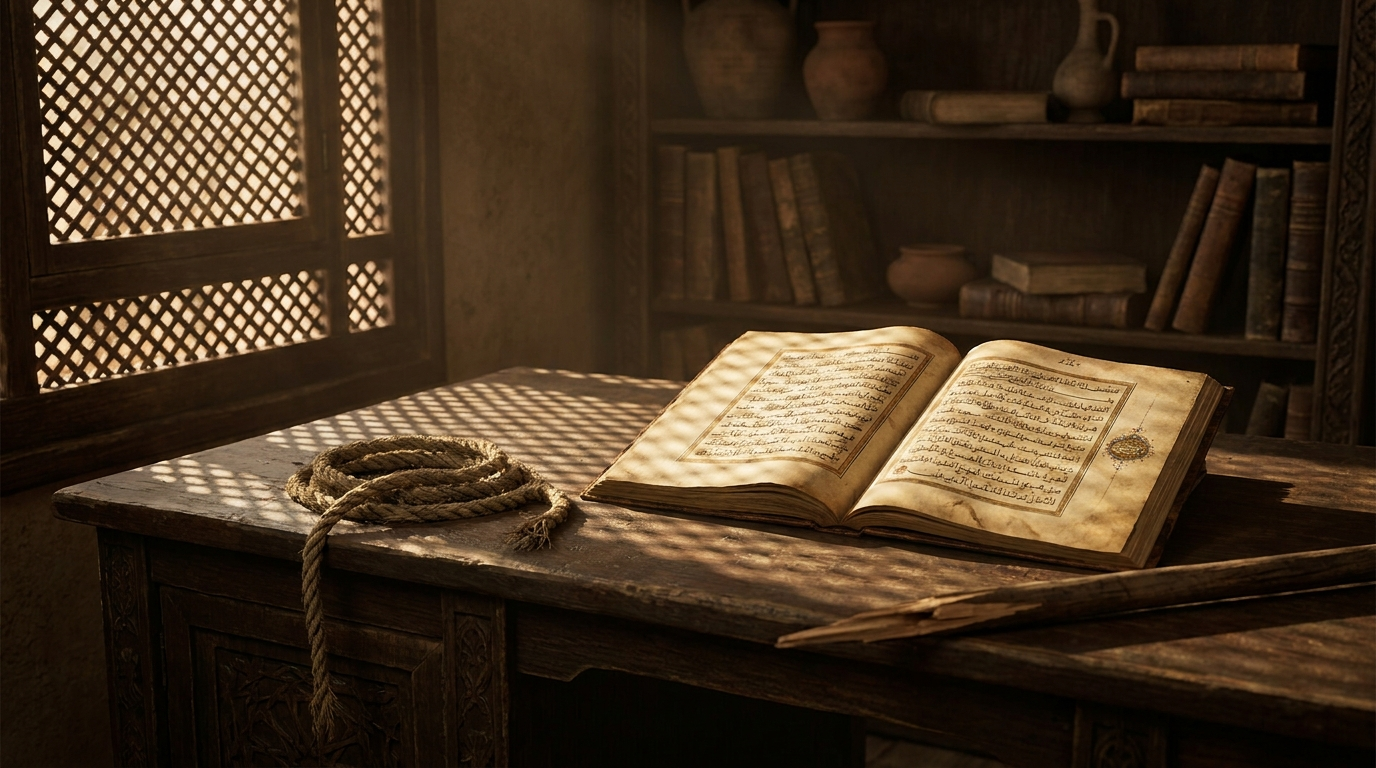
Ramadan, 2 AH — March 624 CE. The wells of Badr are behind them. Roughly seventy men of Quraysh walk roped together as prisoners in the victorious column heading back to Medina. Almost all of them will live to be ransomed or freed. But two men in that column never see Medina. At a halt called al-Safra, one prisoner is separated from the line and beheaded. A stage further on, at Irq al-Zabya, a second prisoner follows him. The first, al-Nadr ibn al-Harith, was famous in Mecca for something unusual: he told the Persian tales of Rustam and Isfandiyar and boasted that his stories were better than what Muhammad recited. The second, Uqba ibn Abi Mu'ayt, appears by name in Sahih al-Bukhari — in two of the ugliest scenes of the Meccan years.
Why were these two killed when the rest were spared? Was it revenge on a storyteller who set his tales against the Quran — or the punishment of two men the books describe as the worst offenders of Mecca?
Continue Reading
Continue reading this article
Sign in free to read in full. Become a member to join the discussion without limits.
Sign in free to read →- ✓Read every article
- ✓Comment and reply (up to 100 words, 10/month)
- ✓Browse the community
- ✓Reader badge