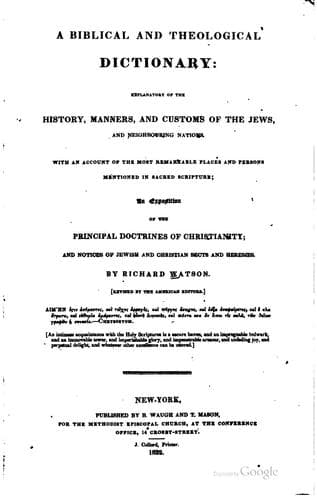
A Biblical and Theological Dictionary: explanatory of the history, manners, and customs of the Jews, and neighbouring nationsWatson, Richard
Religion
A Biblical and Theological Dictionary: explanatory of the history, manners, and customs of the Jews, and neighbouring nations
Watson, Richard
Bible -- Dictionaries; Theology -- Dictionaries
APE, קוֹף, κῆφος and κῆπος, _cephus_, 1 Kings x, 22; 2 Chron. ix, 21.
This animal seems to be the same with the _ceph_ of the Ethiopians, of
which Pliny speaks, l. viii, c. 19: “At the games given by Pompey the
Great,” says he, “were shown _cephs_ brought from Ethiopia, which had
their fore feet like a human hand, their hind legs and feet also
resembled those of a man.” The Scripture says that the fleet of Solomon
brought apes, or rather monkeys, &c, from Ophir. The learned are not
agreed respecting the situation of that country; but Major Wilford says
that the ancient name of the River Landi sindh in India was _Cophes_.
May it not have been so called from the קפים inhabiting its banks?
We now distinguish this tribe of creatures into 1. _Monkeys_, those with
long tails; 2. _Apes_, those with short tails; 3. _Baboons_, those
without tails. The ancient Egyptians are said to have worshipped apes;
it is certain that they are still adored in many places in India.
Maffeus describes a magnificent temple dedicated to the ape, with a
portico for receiving the victims sacrificed, supported by seven hundred
columns.
“With glittering gold and sparkling gems they shine,
But apes and monkeys are the gods within.”
Figures of apes are also made and reverenced as idols, of which we have
several in Moore’s “Hindoo Pantheon;” also in the avatars, given in
Maurice’s “History of India,” &c. In some parts of the country the apes
are held sacred, though not resident in temples; and incautious English
gentlemen, by attempting to shoot these apes, (rather, perhaps,
monkeys,) have been exposed, not only to all manner of insults and
vexations from the inhabitants of the villages, &c, adjacent, but have
even been in danger of their lives.
APHARSACHITES, a people sent by the kings of Assyria to inhabit the
country of Samaria, in the room of those Israelites who had been removed
beyond the Euphrates, Ezra v, 6. They, with the other Samaritans,
opposed the rebuilding of the walls of Jerusalem, Ezra iv, 9.
APIS, a symbolical deity worshipped by the Egyptians. It was an ox,
having certain exterior marks, in which animal the soul of the great
Osiris was supposed to subsist. The ox was probably made the symbol of
Osiris because he presided over agriculture.
Public-domain text, read in full here on John Shaqi.
Reviews
Reviews
No reviews yet
Be the first to share your thoughts on this work.
Elsewhere in the archive
Join the Discussion
Join the discussion
Sign in to leave a comment or review.
Sign InorCreate an account