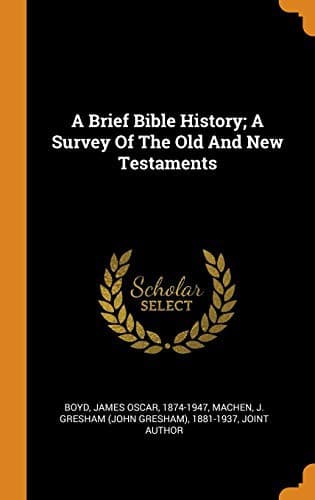
A Brief Bible History: A Survey of the Old and New TestamentsMachen, J. Gresham (John Gresham)
Religion
A Brief Bible History: A Survey of the Old and New Testaments
Machen, J. Gresham (John Gresham)
Bible stories, English
5. How were Isaac and Jacob kept from marrying outside their own
family?
6. Explain Joseph's words, "Ye meant evil against me; but God
meant it for good, to bring to pass, as it is this day, to
save much people alive." Gen. 50:20.
LESSON III
Egyptian Bondage and Deliverance
Exodus, Chapter 1
God says through his prophet Hosea, Hos. 11:1, "When Israel was a
child, then I loved him, and called my son out of Egypt." See also
Matt. 2:15. There was a loving, divine purpose in the Egyptian
residence of God's people. What was it? What did this period mean in
the career of Israel?
Most obviously, it meant growth. From the "seventy souls," Ex.
1:5, that went down into Egypt with Jacob, there sprang up there a
populous folk, large enough to take its place alongside the other
nations of the world of that day. Observe the nature of the land
where this growth took place. Egypt was a settled country, where the
twelve developing tribes could be united geographically and socially
in a way impossible in a country like Palestine. However oppressed
they were, they nevertheless were secluded from the dangers of raids
from without and of civil strife within--just such dangers as later
almost wrecked the substantial edifice slowly erected by this period
of growth in Egypt.
Egypt meant also for Israel a time of waiting. All this growth was
not accomplished in a short time. It lasted four hundred and thirty
years. Ex. 12:40, 41. Through this long period, which seems like
a dark tunnel between the brightness of the patriarchs' times and
that of Moses' day, there was nothing for God's people to do but to
wait. They were the heirs of God's promise, but they must wait for
the fulfillment of that promise in God's own time, wait for a leader
raised up by God, wait for the hour of national destiny to strike.
As Hosea, ch. 11:1 expresses it, this "child" must wait for his
Father's "call." The Egyptian period left an indelible impression on
the mind of Israel. It formed the gray background on which God could
lay the colors of his great deliverance. It is because God knew and
planned this that he so often introduces himself to his people, when
he speaks to them, as "Jehovah thy God, who brought thee out of the
land of Egypt, out of the house of bondage."
Public-domain text, read in full here on John Shaqi.
Reviews
Reviews
No reviews yet
Be the first to share your thoughts on this work.
Join the Discussion
Join the discussion
Sign in to leave a comment or review.
Sign InorCreate an account