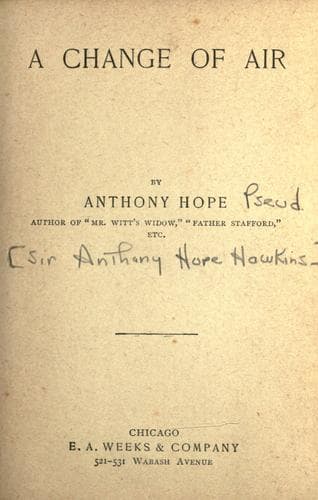
Country homes -- Fiction; England -- Social life and customs -- 19th century -- Fiction; Fame -- Fiction; Poets -- Fiction
"Don't betray us, don't betray us;" and thus the very uncomfortable
interview came to a desired end.
That night at dinner Dale was cross and in low spirits. His friends,
perceiving it, forbore to express their views as to his last public
utterance, and the repast dragged its weary length along amid
intermittent conversation.
When the dessert was on the table, a note was brought for Dale. It was
from the Squire.
DEAR BANNISTER: I was very glad to see your letter in the _Chronicle_.
Mrs. Delane joins me in hoping you will dine with us to-morrow _en
famille_. Excuse short notice. The man waits for an answer--don't
write one.
Yours truly,
GEORGE DELANE.
"Say I'll come with great pleasure," said Dale, his face growing
brighter.
"Where will he go with great pleasure?" asked Philip of Nellie Fane.
"Where is it, Dale?"
"Oh, only to the Grange, to dinner to-morrow. I think I had better
write a note, though--don't you think so, Phil? More--more attentive,
you know."
"Write, my son," answered Philip, and, as Dale left the room, he looked
round with a smile and exclaimed, "One!"
"One what, my dear?" asked Mrs. Hodge.
"Piece of silver, ma'am," replied Philip.
"You're sneering again," said Nellie in a warning tone. "Why shouldn't
he like to dine at the Grange?" and she looked marvelously reasonable
and indifferent.
"I was speaking with the voice of Doctor Roberts, Nellie, that's all.
For my own part, I think a dinner is one of those things one may accept
even from the enemy."
CHAPTER IX.
=Dale's Own Opinion.=
If ever our own fortune would allow us to be perfectly happy, the
consumation is prevented and spoiled by the obstinately intruding
unhappiness of others. The reverend person who was of opinion that the
bliss of the blessed would be increased and, so to say, vivified by the
sight of the tortures of the damned, finds few supporters nowadays,
perhaps because our tenderer feelings shrink from such a ruthless
application of the doctrine that only by contemplating the worse can
we enjoy the better; perhaps also because we are not so sure as he was
that we should not be the onlooked rather than the onlookers if ever
his picture came to be realized. So sensitive are we to the ills that
others suffer that at times we feel almost a grudge against them for
their persistence--however unwilling it be--in marring our perfect
contentment; surely they could let us forget them for once in a way.
Public-domain text, read in full here on John Shaqi.
Reviews
Reviews
No reviews yet
Be the first to share your thoughts on this work.
Join the Discussion
Join the discussion
Sign in to leave a comment or review.
Sign InorCreate an account