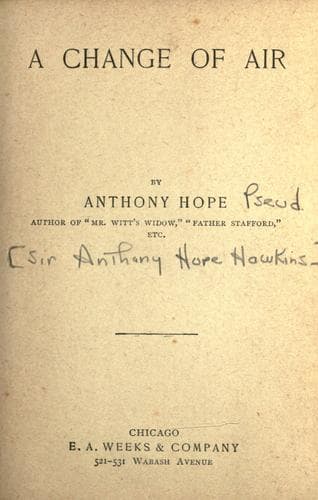
Country homes -- Fiction; England -- Social life and customs -- 19th century -- Fiction; Fame -- Fiction; Poets -- Fiction
She sat up in bed, the coverings falling from her, and her black hair
streaming over her white night-dress. Clasping her hands over her
knees, she looked before her out of the window. She could see the tree
where Dale had stood and the spot where she had fallen; she could see
the fresh red gravel, put down to hide the stains, and the gardener's
rake, flung down where he had used it. He must have gone to tea--gone
to talk it all over with his wife and his friends, to wonder why Miss
Janet had not called out, why she had left it to the other girl, why
she had fainted, while the other had saved him. They would talk of
"poor Miss Janet," and call the other a "rare plucked 'un"--she knew
their way. Nobody would ever call her that--not her father again, who
used to boast that Janet, like all his house, feared nothing but
dishonor, and would make as good a soldier as the son he had longed
for in vain. Her mother had come and called her "a brave girl." Why
did people think there was any good in lies? She meant it kindly,
but it was horrible to hear it. Lies are no use. Let them call her a
coward, if they wanted to speak the truth. They all thought that. Dale
thought it; Dale, who must be admiring that other girl's gallantry, and
wondering why he had not loved her, instead of loving a girl who talked
big, and, when danger came, fainted--and stood by to see him die.
Of course he could not go on loving her after this. He would feel,
everybody must feel, that he owed his life to the girl who had saved
him, and must give it to her. Very likely he would come and pretend to
want her still. He would think it right to do that, though it would
really be kinder just to let her drop. She would understand. Nobody
knew he had spoken to her; perhaps nobody need; it would not seem so
bad to people who did not know she had promised to be his wife. Not
that it mattered much what people thought. She knew what she was,
and--she must let him go, she must let him go. And here, for the first
time, she buried her head in her pillow and sobbed.
Mrs. Delane came in.
"Why, Janet dearest, you've nothing over you! You'll catch cold. What's
the matter, darling? Are you frightened?"
There it was! Everybody thought she was frightened now.
"There is a message from Mr. Bannister, darling. He wants so much to
see you, and the doctor thinks it would do you no harm. Do you think
you could dress and see him?"
"He wants to see me?"
"Why, yes, dear. Of course, Jan. I know, my dear."
"To leave her and come and see me?"
"Miss Fane? Oh, she's going on very well. There's no reason he
shouldn't come over here. You would like to see him, Jan?"
"Tell him to go away--tell him to go to her--tell him to leave me
alone."
"But, Jan, dearest----"
"Oh, mamma, mamma, do leave me alone!"
Mrs. Delane went and told the messenger that Miss Delane might see no
one for a day or two; she was still too agitated. Then she sought her
husband and told him of their daughter's words.
Public-domain text, read in full here on John Shaqi.
Reviews
Reviews
No reviews yet
Be the first to share your thoughts on this work.
Elsewhere in the archive
Join the Discussion
Join the discussion
Sign in to leave a comment or review.
Sign InorCreate an account