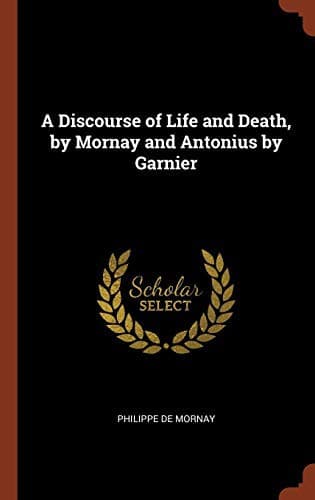
A Discourse of Life and Death, by Mornay; and Antonius by GarnierMornay, Philippe de, seigneur du Plessis-Marly
Religion
A Discourse of Life and Death, by Mornay; and Antonius by Garnier
Mornay, Philippe de, seigneur du Plessis-Marly
Antonius, Marcus, 83 B.C.?-30 B.C. -- Drama; Death -- Early works to 1800
in all our life there is nothing certaine, nothing assured, but
the certaintie and vncertaintie of death. Behold, now comes
Death vnto vs: Behold her, whose approch we so much feare. We
are now to cõsider whether she be such as wee are made beleeue:
and whether we ought so greatly to flie her, as commonly wee do.
Wee are afraide of her: but like little children of a vizarde,
or of the Images of _Hecate_. Wee haue her in horror: but
because wee conceiue her not such as she is, but ougly,
terrible, and hideous: such as it pleaseth the Painters to
represent vnto vs on a wall. Wee flie before her: but it is
because foretaken with such vaine imaginations, wee giue not our
selues leisure to marke her. But staie wee, stande wee stedfast,
looke wee her in the face: wee shall finde her quite other then
shee is painted vs: and altogether of other countenaunce then
our miserable life. Death makes an ende of this life. This life
is a perpetuall misery and tempest: Death then is the issue of
our miseries and entraunce of the porte where wee shall ride in
safetie from all windes. And shoulde wee feare that which
withdraweth vs from misery, or which drawes vs into our Hauen?
Yea but you will say, it is a payne to die. Admit it bee: so is
there in curing of a wounde. Such is the worlde, that one euill
can not bee cured but by an other, to heale a contusion, must
bee made an incision. You will say, there is difficultie in the
passage: So is there no Hauen, no Porte, whereinto the entraunce
is not straite and combersome. No good thing is to be bought in
this worlde with other then the coyne of labour and paine. The
entraunce indeede is hard, if our selues make it harde, comming
thither with a tormented spirite, a troubled minde, a wauering
and irresolute thought. But bring wee quietnesse of mind,
constancie, and full resolution, wee shall not finde anie
daunger or difficultie at all. Yet what is the paine that death
brings vs? Nay, what can shee doe with those paines wee feele?
Wee accuse her of all the euilles wee abide in ending our life,
and consider not howe manie more greeuous woundes or sickenesses
wee haue endured without death: or howe many more vehement
paines wee haue suffered in this life, in the which wee called
euen her to our succour. All the paines our life yeeldes vs at
the last houre wee impute to Death: not marking that life
begunne and continued in all sortes of paine, must also
necessarily ende in paine. Not marking (I saie) that it is the
remainder of our life, not death, that tormenteth vs: the ende
of our nauigation that paines vs, not the Hauen wee are to
enter: which is nothing else but a safegarde against all windes.
Wee complayne of Death, where wee shoulde complayne of life: as
if one hauyng beene long sicke, and beginning to bee well,
shoulde accuse his health of his last paynes, and not the
reliques of his disease. Tell mee, what is it else to bee dead,
but to bee no more liuing in the worlde? Absolutelie and simplie
Public-domain text, read in full here on John Shaqi.
Reviews
Reviews
No reviews yet
Be the first to share your thoughts on this work.
Join the Discussion
Join the discussion
Sign in to leave a comment or review.
Sign InorCreate an account