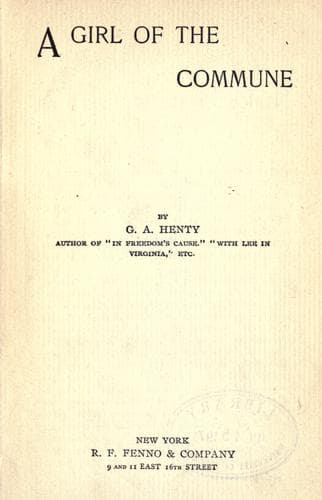
Paris (France) -- History -- Commune, 1871 -- Fiction
The defences had been strengthened to an enormous extent; the outlying
forts which, when the siege began, could have been carried without much
difficulty by a resolute attack, had now been rendered practically
impregnable, their approaches had been thickly mined, obstacles of all
sorts erected round them, and the casements, barracks, and magazines
protected by coverings of trunks of trees and so great a depth of earth
as to be able to defy the heaviest shell.
The walls of the _enciente_ had been repaired and greatly strengthened,
and covered by bastions and other works, so that even were one of the
forts taken the work of the enemy would but be begun. The theatres had
been closed from the first. The cafe's chantants, and the open-air
concerts had long since followed the example, partly because of the
increasing seriousness of the temper of the people, partly because of
the failure of the gas. The cafe's themselves were no longer crowded
until midnight; the dim lights of the lamps that had taken the place of
gas gave a sombre air to these establishments, and by eight o'clock in
the evening most of them put up their shutters.
The National Guard were being reorganized. From each battalion, three or
four hundred of the most able-bodied, for the most part unmarried, men,
had by order of the Government, been selected and formed into companies
for service in the field, and these promised in a short time to develop
into troops equal in physique and spirit to the mobiles, and vastly
superior to the line.
Ladies no longer appeared in the streets in rich dresses. It was felt
that these were out of place now, and all adornments had been rigidly
given up, and the women of the better class set the example of dressing
in the simplest of costumes and the quietest of colors. Great numbers
had devoted themselves to the services of the hospitals and ambulances,
and spent the whole of their time in ministering to the sick and
wounded.
As yet there was little real suffering in Paris, and the privations and
inconveniences were borne uncomplainingly, and even cheerfully. Beef had
become almost unobtainable, but it was agreed that horse-flesh was not a
bad substitute; cats and dogs were fast disappearing from the streets,
and their flesh, prepared in a variety of ways, took the place on the
cards of the restaurants of hares and game, and the change was hardly
noticed.
Cuthbert was working hard. The school was now definitely closed, but
those who liked to do so were free to work there when they chose. M.
Goude had taken advantage of the cessation of lessons to paint on his
own account, and was engaged upon a large canvas which he announced was
intended for the Salon.
Public-domain text, read in full here on John Shaqi.
Reviews
Reviews
No reviews yet
Be the first to share your thoughts on this work.
Elsewhere in the archive
Join the Discussion
Join the discussion
Sign in to leave a comment or review.
Sign InorCreate an account