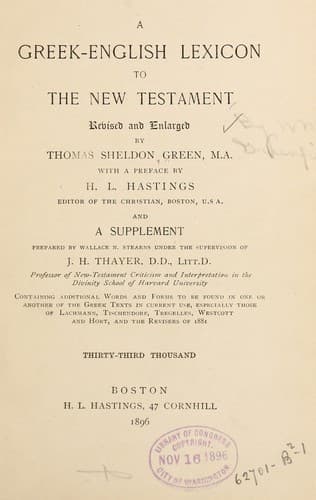
A Greek-English Lexicon to the New TestamentGreenfield, William
Religion
A Greek-English Lexicon to the New Testament
Greenfield, William
Bible. New Testament -- Dictionaries -- English; Greek language, Biblical -- Dictionaries -- English
17.5; in N.T., mid. to manifest agitation
of mind, to raise a lament, Mat. 9.23. Mar. 5.39. Ac. 20.10:
from
Θόρῠβος, ου, ὁ,
an uproar, din; an outward expression of mental agitation,
Mar. 5.38; a tumult, commotion, Mat. 26.5, et al.
Θραύω,
f. αύσω, pass. p. part. τεθραυσμένος,
to break, shiver; met. shattered, crushed by cruel oppression,
Lu. 4.18.
Θρέμμα, ατος, τό, (τρέφω)
that which is reared; pl. cattle, Jno. 4.12.
Θρηνέω, ῶ,
f. ήσω, a.1. ἐθρήνησα,
to lament, bewail, Mat. 11.17. Lu. 7.32. Jno. 16.20:
from
Θρῆνος, ου, ὁ, (θρέομαι, to shriek)
wailing, lamentation, Mat. 2.18.
Θρησκεία, ας, ἡ,
religious worship, Col. 2.18; religion, a religious system,
Ac. 26.5; religion, piety, Ja. 1.26, 27:
from
Θρῆσκος, ου, ὁ, ἡ,
occupied with religious observances; in N.T., religious, devout,
pious, Ja. 1.26.
Θριαμβεύω, (θρίαμβος, a hymn in hornour of Bacchus; a triumph)
f. εύσω
pr. to celebrate a triumph; trans. to lead in triumph,
celebrate a triumph over, Col. 2.15; in N.T. to cause
to triumph, 2 Co. 2.14. L.G.
Θρίξ, τρῐχός, ἡ,
pl. αἱ τρίχες, dat. θριξί, the hair of the head,
Mat. 5.36; 10.30, et al.; of an animal, Mat. 3.4. Mar. 1.6
Θροέω, ῶ, (θρόος, an uproar, fr. θρέομαι)
to make a clamour to cry aloud; in N.T.,
pass. to be disturbed, disquieted, alarmed, terrified,
Mat. 24.6. Mar. 13.7. 2 Th. 2.2.
Θρόμβος, ου, ὁ,
a lump; espec. a clot of blood, Lu. 22.44.
Θρόνος, ου, ὁ, (θράω, to set)
a seat, a throne, Mat. 5.34; 19.28. Lu. 1.52;
meton. power, dominion, Lu. 1.32. He. 1.8; a potentate,
Col. 1.16, et al.
Θῠγάτηρ, τέρος, τρός,
dat. τέρι, τρί, acc. τέρα, voc. θύγατερ, ἡ,
a daughter, Mat. 9.18; 10.35, 37; in the vocative,
an expression of affection and kindness, Mat. 9.22;
fr. the Heb. one of the female posterity of any one,
Lu. 1.5; met. a city, Mat. 21.5. Jno. 12.15;
pl. female inhabitants, Lu. 23.28: (ᾰ)
whence dimin.
Θυγάτριον, ίου, τό,
a little daughter, female child, Mar. 5.23; 7.25.
Θύελλα, ης, ἡ, (θύω)
a tempest, whirlwind, hurricane, He. 12.18.
Θύϊνος, η, ον,
thyine, of θυΐα, thya, an aromatic everygreen tree,
arbor vitœ, resembling the cedar, and found in Lybia,
Re. 18.12. (ῐ).
Θυμίᾱμα, ατος, τό, (θυμιάω)
incense, any odoriferous substance burnt in religious
worship, Re. 5.8; 8.3, 4; 18.13; or, the act of burning
incense, Lu. 1.10, 11.
Θυμιᾱτήριον, ίου, τό,
a censer for burning incense, He. 9.4:
from
Θυμιάω, ῶ, (θύω)
f. άσω,
to burn incense, Lu. 1.9.
Θυμομᾰχέω, ῶ, (θυμός & μάχομαι)
f. ήσω,
to wage war fiercely; to be warmly hostile to, be enraged
against, Ac. 12.20. L.G.
Θῡμός, ου, ὁ, (θύω)
pr. the soul, mind; hence, a strong passion or emotion
of the mind; anger, wrath, Lu. 4.28. Ac. 19.28, et al.;
pl. swellings of anger, 2 Co. 12.20. Ga. 5.20:
whence
Θυμόω, ῶ,
f. ώσω,
to provoke to anger; pass. to be angered, enraged,
Mat. 2.16.
Θύρα, ας, ἡ,
a door, gate, Mat. 6.6. Mar. 1.33; an entrance, Mat.
Public-domain text, read in full here on John Shaqi.
Reviews
Reviews
No reviews yet
Be the first to share your thoughts on this work.
Elsewhere in the archive
Join the Discussion
Join the discussion
Sign in to leave a comment or review.
Sign InorCreate an account