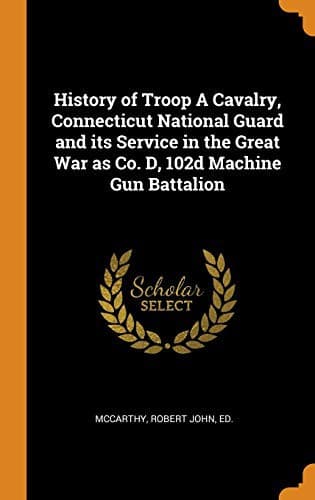
A History of Troop A Cavalry, Connecticut National Guard and Its Service in the Great War as Co. D, 102d Machine Gun Battalion
History
A History of Troop A Cavalry, Connecticut National Guard and Its Service in the Great War as Co. D, 102d Machine Gun Battalion
United States. Army. Machine Gun Battalion, 102nd. Company D; World War, 1914-1918 -- Regimental histories -- United States
Assigned to relieve a troop of the regular cavalry doing patrol duty
near the custom house at Lochiel, twenty-eight miles east of Nogales,
the Troop spent a month there patrolling and perfecting the prescribed
drills. The surroundings of the new camp were ideal for out-door life
and the twenty miles that intervened between the men and the nearest
army post tended to foster organization spirit. Card games, letter
writing and rides over the hills occupied the spare time the men found
on their hands at rare intervals. It was only the persistent rumors and
chilly nights which came with fall weather that made the men anxious to
leave for home.
There being no further necessity of maintaining such a large force of
men at the border, the Troop was named as one of the units to start the
homeward trip. Returning to Nogales September 30, Troop A occupied,
as barracks, mess halls of the type they had built when they first
arrived. There they worked on the problems of turning over horses and
equipment to the authorities, only thirty-two horses and equipment for
that number being allotted to the Troop by the War Department, and
entrained, bound for home, October 10.
A long trip through the mountainous section of the southwest and the
prairie region of the west with only short daily stops to water and
feed the horses, found the Troopers willing to take the first chance
that offered to relieve the monotony of the journey. When the train
stopped at Kansas City for a short time many of the men visited the
city. Supplies were purchased from the Troop fund to add to the issued
rations of corned beef hash and beans and the train pulled out with a
happy crowd of soldiers.
Mysterious bottles made their appearance from under coats and inside
shirts to add their share to the celebration. There was no sleep in the
Pullmans that night. Making friends with the guard at the door of the
kitchen car was easy, for he was Irish and inclined to be friendly, so
a case of fresh eggs was soon in the hands of the men nearest the door.
These they used with great abandon to the discomfort of the porter and
members of the guard. The next morning omelets were dripping from the
lighting fixtures and walls and formed a thick film over hats and shoes
exposed to the attack. The violent character of the barrage prevented
investigation during the battle and when the affair had quieted down it
was judged by First Sergeant Herrick that the entire car-load was at
fault so all were pressed into service to police the car.
The rest of the trip home was long and tedious. Innumerable delays were
experienced, for, with the emergency at an end, the railroads shifted
troop trains aside at the least excuse. The journey was brightened,
however, by a trip to Niagara Falls for the men who took advantage of a
stop at Buffalo. New Haven people lined the streets in an unprecedented
outpouring of welcome when the train pulled into the home station
October 22.
Public-domain text, read in full here on John Shaqi.
Reviews
Reviews
No reviews yet
Be the first to share your thoughts on this work.
Join the Discussion
Join the discussion
Sign in to leave a comment or review.
Sign InorCreate an account