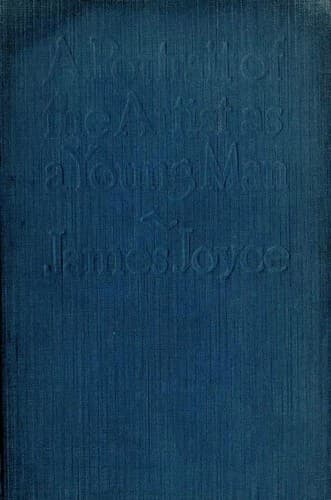
A Portrait of the Artist as a Young ManJoyce, James
General
A Portrait of the Artist as a Young Man
Joyce, James
Artists -- Fiction; Autobiographical fiction; Bildungsromans; Dublin (Ireland) -- Fiction; Young men -- Fiction
The train was full of fellows: a long long chocolate train with cream
facings. The guards went to and fro opening, closing, locking,
unlocking the doors. They were men in dark blue and silver; they had
silvery whistles and their keys made a quick music: click, click:
click, click.
And the train raced on over the flat lands and past the Hill of Allen.
The telegraph poles were passing, passing. The train went on and on. It
knew. There were lanterns in the hall of his father’s house and ropes
of green branches. There were holly and ivy round the pierglass and
holly and ivy, green and red, twined round the chandeliers. There were
red holly and green ivy round the old portraits on the walls. Holly and
ivy for him and for Christmas.
Lovely...
All the people. Welcome home, Stephen! Noises of welcome. His mother
kissed him. Was that right? His father was a marshal now: higher than a
magistrate. Welcome home, Stephen!
Noises...
There was a noise of curtainrings running back along the rods, of water
being splashed in the basins. There was a noise of rising and dressing
and washing in the dormitory: a noise of clapping of hands as the
prefect went up and down telling the fellows to look sharp. A pale
sunlight showed the yellow curtains drawn back, the tossed beds. His
bed was very hot and his face and body were very hot.
He got up and sat on the side of his bed. He was weak. He tried to pull
on his stocking. It had a horrid rough feel. The sunlight was queer and
cold.
Fleming said:
—Are you not well?
He did not know; and Fleming said:
—Get back into bed. I’ll tell McGlade you’re not well.
—He’s sick.
—Who is?
—Tell McGlade.
—Get back into bed.
—Is he sick?
A fellow held his arms while he loosened the stocking clinging to his
foot and climbed back into the hot bed.
He crouched down between the sheets, glad of their tepid glow. He heard
the fellows talk among themselves about him as they dressed for mass.
It was a mean thing to do, to shoulder him into the square ditch, they
were saying.
Then their voices ceased; they had gone. A voice at his bed said:
—Dedalus, don’t spy on us, sure you won’t?
Wells’s face was there. He looked at it and saw that Wells was afraid.
—I didn’t mean to. Sure you won’t?
His father had told him, whatever he did, never to peach on a fellow.
He shook his head and answered no and felt glad.
Wells said:
—I didn’t mean to, honour bright. It was only for cod. I’m sorry.
The face and the voice went away. Sorry because he was afraid. Afraid
that it was some disease. Canker was a disease of plants and cancer one
of animals: or another different. That was a long time ago then out on
the playgrounds in the evening light, creeping from point to point on
the fringe of his line, a heavy bird flying low through the grey light.
Leicester Abbey lit up. Wolsey died there. The abbots buried him
themselves.
Public-domain text, read in full here on John Shaqi.
Reviews
Reviews
No reviews yet
Be the first to share your thoughts on this work.
Join the Discussion
Join the discussion
Sign in to leave a comment or review.
Sign InorCreate an account