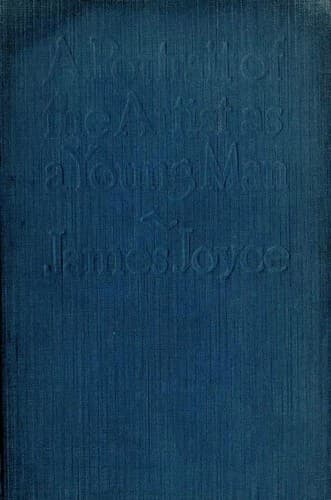
A Portrait of the Artist as a Young ManJoyce, James
General
A Portrait of the Artist as a Young Man
Joyce, James
Artists -- Fiction; Autobiographical fiction; Bildungsromans; Dublin (Ireland) -- Fiction; Young men -- Fiction
He pushed open the latchless door of the porch and passed through the
naked hallway into the kitchen. A group of his brothers and sisters was
sitting round the table. Tea was nearly over and only the last of the
second watered tea remained in the bottoms of the small glass jars and
jampots which did service for teacups. Discarded crusts and lumps of
sugared bread, turned brown by the tea which had been poured over them,
lay scattered on the table. Little wells of tea lay here and there on
the board, and a knife with a broken ivory handle was stuck through the
pith of a ravaged turnover.
The sad quiet greyblue glow of the dying day came through the window
and the open door, covering over and allaying quietly a sudden instinct
of remorse in Stephen’s heart. All that had been denied them had been
freely given to him, the eldest; but the quiet glow of evening showed
him in their faces no sign of rancour.
He sat near them at the table and asked where his father and mother
were. One answered:
—Goneboro toboro lookboro atboro aboro houseboro.
Still another removal! A boy named Fallon, in Belvedere, had often
asked him with a silly laugh why they moved so often. A frown of scorn
darkened quickly his forehead as he heard again the silly laugh of the
questioner.
He asked:
—Why are we on the move again if it’s a fair question?
—Becauseboro theboro landboro lordboro willboro putboro usboro outboro.
The voice of his youngest brother from the farther side of the
fireplace began to sing the air _Oft in the Stilly Night_. One by one
the others took up the air until a full choir of voices was singing.
They would sing so for hours, melody after melody, glee after glee,
till the last pale light died down on the horizon, till the first dark
nightclouds came forth and night fell.
He waited for some moments, listening, before he too took up the air
with them. He was listening with pain of spirit to the overtone of
weariness behind their frail fresh innocent voices. Even before they
set out on life’s journey they seemed weary already of the way.
He heard the choir of voices in the kitchen echoed and multiplied
through an endless reverberation of the choirs of endless generations
of children and heard in all the echoes an echo also of the recurring
note of weariness and pain. All seemed weary of life even before
entering upon it. And he remembered that Newman had heard this note
also in the broken lines of Virgil, “giving utterance, like the voice
of Nature herself, to that pain and weariness yet hope of better things
which has been the experience of her children in every time.”
He could wait no longer.
Public-domain text, read in full here on John Shaqi.
Reviews
Reviews
No reviews yet
Be the first to share your thoughts on this work.
Elsewhere in the archive
Join the Discussion
Join the discussion
Sign in to leave a comment or review.
Sign InorCreate an account