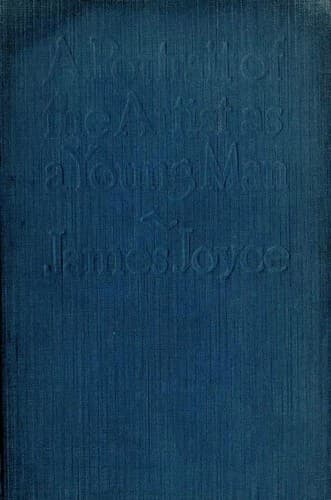
A Portrait of the Artist as a Young ManJoyce, James
General
A Portrait of the Artist as a Young Man
Joyce, James
Artists -- Fiction; Autobiographical fiction; Bildungsromans; Dublin (Ireland) -- Fiction; Young men -- Fiction
Did anyone ever hear such drivel? Lord Almighty! Who ever heard of ivy
whining on a wall? Yellow ivy; that was all right. Yellow ivory also.
And what about ivory ivy?
The word now shone in his brain, clearer and brighter than any ivory
sawn from the mottled tusks of elephants. _Ivory, ivoire, avorio,
ebur._ One of the first examples that he had learnt in Latin had run:
_India mittit ebur;_ and he recalled the shrewd northern face of the
rector who had taught him to construe the Metamorphoses of Ovid in a
courtly English, made whimsical by the mention of porkers and potsherds
and chines of bacon. He had learnt what little he knew of the laws of
Latin verse from a ragged book written by a Portuguese priest.
Contrahit orator, variant in carmine vates.
The crises and victories and secessions in Roman history were handed on
to him in the trite words _in tanto discrimine_ and he had tried to
peer into the social life of the city of cities through the words
_implere ollam denariorum_ which the rector had rendered sonorously as
the filling of a pot with denaries. The pages of his timeworn Horace
never felt cold to the touch even when his own fingers were cold; they
were human pages and fifty years before they had been turned by the
human fingers of John Duncan Inverarity and by his brother, William
Malcolm Inverarity. Yes, those were noble names on the dusky flyleaf
and, even for so poor a Latinist as he, the dusky verses were as
fragrant as though they had lain all those years in myrtle and lavender
and vervain; but yet it wounded him to think that he would never be but
a shy guest at the feast of the world’s culture and that the monkish
learning, in terms of which he was striving to forge out an esthetic
philosophy, was held no higher by the age he lived in than the subtle
and curious jargons of heraldry and falconry.
The grey block of Trinity on his left, set heavily in the city’s
ignorance like a dull stone set in a cumbrous ring, pulled his mind
downward and while he was striving this way and that to free his feet
from the fetters of the reformed conscience he came upon the droll
statue of the national poet of Ireland.
He looked at it without anger; for, though sloth of the body and of the
soul crept over it like unseen vermin, over the shuffling feet and up
the folds of the cloak and around the servile head, it seemed humbly
conscious of its indignity. It was a Firbolg in the borrowed cloak of a
Milesian; and he thought of his friend Davin, the peasant student. It
was a jesting name between them, but the young peasant bore with it
lightly:
—Go on, Stevie, I have a hard head, you tell me. Call me what you will.
Public-domain text, read in full here on John Shaqi.
Reviews
Reviews
No reviews yet
Be the first to share your thoughts on this work.
Elsewhere in the archive
Join the Discussion
Join the discussion
Sign in to leave a comment or review.
Sign InorCreate an account