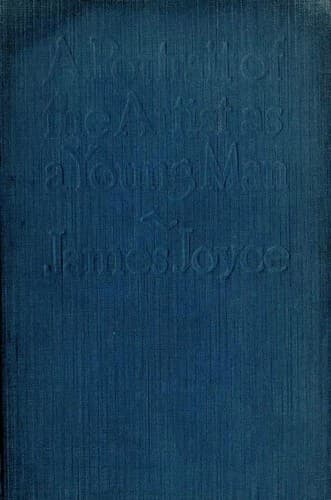
A Portrait of the Artist as a Young ManJoyce, James
General
A Portrait of the Artist as a Young Man
Joyce, James
Artists -- Fiction; Autobiographical fiction; Bildungsromans; Dublin (Ireland) -- Fiction; Young men -- Fiction
The equation on the page of his scribbler began to spread out a
widening tail, eyed and starred like a peacock’s; and, when the eyes
and stars of its indices had been eliminated, began slowly to fold
itself together again. The indices appearing and disappearing were eyes
opening and closing; the eyes opening and closing were stars being born
and being quenched. The vast cycle of starry life bore his weary mind
outward to its verge and inward to its centre, a distant music
accompanying him outward and inward. What music? The music came nearer
and he recalled the words, the words of Shelley’s fragment upon the
moon wandering companionless, pale for weariness. The stars began to
crumble and a cloud of fine stardust fell through space.
The dull light fell more faintly upon the page whereon another equation
began to unfold itself slowly and to spread abroad its widening tail.
It was his own soul going forth to experience, unfolding itself sin by
sin, spreading abroad the balefire of its burning stars and folding
back upon itself, fading slowly, quenching its own lights and fires.
They were quenched: and the cold darkness filled chaos.
A cold lucid indifference reigned in his soul. At his first violent sin
he had felt a wave of vitality pass out of him and had feared to find
his body or his soul maimed by the excess. Instead the vital wave had
carried him on its bosom out of himself and back again when it receded:
and no part of body or soul had been maimed but a dark peace had been
established between them. The chaos in which his ardour extinguished
itself was a cold indifferent knowledge of himself. He had sinned
mortally not once but many times and he knew that, while he stood in
danger of eternal damnation for the first sin alone, by every
succeeding sin he multiplied his guilt and his punishment. His days and
works and thoughts could make no atonement for him, the fountains of
sanctifying grace having ceased to refresh his soul. At most, by an
alms given to a beggar whose blessing he fled from, he might hope
wearily to win for himself some measure of actual grace. Devotion had
gone by the board. What did it avail to pray when he knew that his soul
lusted after its own destruction? A certain pride, a certain awe,
withheld him from offering to God even one prayer at night though he
knew it was in God’s power to take away his life while he slept and
hurl his soul hellward ere he could beg for mercy. His pride in his own
sin, his loveless awe of God, told him that his offence was too
grievous to be atoned for in whole or in part by a false homage to the
Allseeing and Allknowing.
—Well now, Ennis, I declare you have a head and so has my stick! Do you
mean to say that you are not able to tell me what a surd is?
Public-domain text, read in full here on John Shaqi.
Reviews
Reviews
No reviews yet
Be the first to share your thoughts on this work.
Elsewhere in the archive
Join the Discussion
Join the discussion
Sign in to leave a comment or review.
Sign InorCreate an account