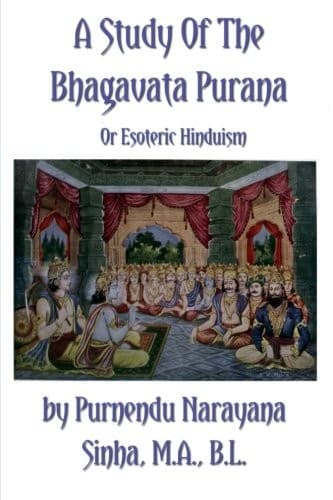
A Study of the Bhâgavata Purâna; or, Esoteric Hinduism
Religion
A Study of the Bhâgavata Purâna; or, Esoteric Hinduism
Puranas. Bhagavatapurana. English
Attachment and aversion, likes and dislikes, are equally necessary for
continued individual action. The Jiva eats what he likes and does not
eat what he dislikes. He associates himself with certain objects, ideas
and thoughts and shuns others. His likes and dislikes form the guiding
principle of his actions. These affinities are called Râga and Dvesha by
Patanjali and Mahâ Moha and Tamisra in the Purânas.
The tenacious desire to live in the present body is called Abhinivesha
by Patanjali. This desire becomes an instinct in the Jiva, so necessary
is it for his preservation. The Purânas call it Andha-Tâmisra. Śridhara
explains it as the shock we receive from a separation from all our
present enjoyments. For, according to him, the idea of death is nothing
but a sense of separation from our present enjoyments.
These forms of Avidyâ were called into being that the forms of the
previous Kalpa might be brought into existence, or that the work of
creation might be undertaken. These faculties are the very essence of
life manifestation. But the process has now been reversed. The work of
creation is over. We have acquired the experiences of earth-life, and we
are now destined to take a journey back to our home, the bosom of
Íshvara, from which we all came. We have now to undo our sense of
separateness. The five forms of Avidyâ are therefore called miseries
(klesha) by Patanjali and he lays down rules for getting rid of them.
After invoking Avidyâ, Brahmâ created the Kumâras, who were the most
spiritual of the beings to be created. They were so spiritual, that they
could not take any part in the work of creation. They had to bide their
time, till there was spiritual ascent in the Universe.
The Rudras, called the Blue-Red Kumâras, come next. Though highly
spiritual themselves they did not object to take part in the work of
creation. But as real factors in the work of dissolution, they were
entirely out of place in the work of creation. We owe our idea of
separateness or individuality to the Rudras. In the scale of universal
life the agencies of dissolution carve out individual lives and their
mission ends there.
Public-domain text, read in full here on John Shaqi.
Reviews
Reviews
No reviews yet
Be the first to share your thoughts on this work.
Join the Discussion
Join the discussion
Sign in to leave a comment or review.
Sign InorCreate an account