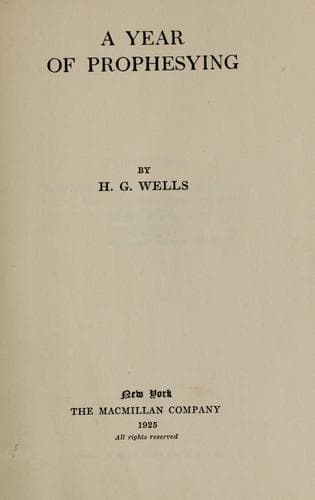
A year of prophesyingWells, H. G. (Herbert George)
History
A year of prophesying
Wells, H. G. (Herbert George)
Civilization, Modern -- 20th century; Europe -- History -- 20th century; Great Britain -- History -- 20th century
Let us consider first the justice of this. Think what we thrust upon
the youth of eighteen in our communities. We voters, a good third of
us above military age, will treat him as citizen enough to undergo
the utmost fatigues and horrors of war, and to be maimed and to die
for us, and the girl of fourteen (is it?) may marry, and the girl of
sixteen may commit herself to dishonour, and either man or girl may
toil in factory or foundry. All that we put upon them. We force them
by need and circumstance to forgo the better part of their education,
to subdue all the wide and wonderful imaginations of these opening
years, and we oblige them to contribute to the wealth of the State in
unattractive work. But they may have no voice in matters in general
until they are thoroughly broken in. I can see a sort of expediency in
disenfranchising unsuccessful people after forty or so, they are dull
and cowed by that time and will bring little to the polls but their
fears and inferiorities. But why gag the young for three of their most
vivid years?
And next there is to be considered the benefit to the individual
citizen of stepping straight from learning to responsibility. He will
be brought into conscious and effective relationship with political
and industrial institutions at the same time; he will face them as two
aspects of one thing just when the spirit of inquiry is strongest in
him. And such of the younger women who are waking up to what Sir Martin
Conway calls the “glory of life” will realise that childbearing is a
thing of issues wider than the fireside; they will be called upon to
think of war and education and the whole future in the very time when
the continuity of life is brought most effectively before their minds.
What sort of a world, what sort of political process can Sir Martin
be thinking about when he suggests that a vision of the glory of life
ought to disqualify a voter?
Public-domain text, read in full here on John Shaqi.
Reviews
Reviews
No reviews yet
Be the first to share your thoughts on this work.
Elsewhere in the archive
Join the Discussion
Join the discussion
Sign in to leave a comment or review.
Sign InorCreate an account