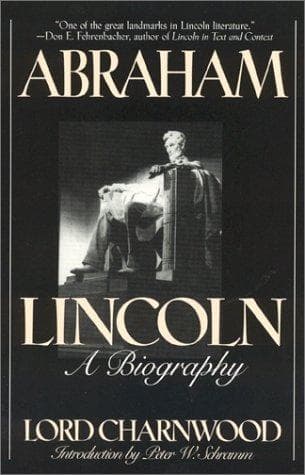
Abraham LincolnCharnwood, Godfrey Rathbone Benson, Baron
History
Abraham Lincoln
Charnwood, Godfrey Rathbone Benson, Baron
Lincoln, Abraham, 1809-1865; Presidents -- United States -- Biography
Now this by no means implied that slavery in the States which now
adhered to it should be exposed to attack from outside, or the slave
owner be denied any right which he could claim under the Constitution,
however odious and painful it might be, as in the case of the rendition
of fugitive slaves, to yield him his rights. "We allow," says Lincoln,
"slavery to exist in the slave States, not because it is right, but
from the necessities of the Union. We grant a fugitive slave law
because it is so 'nominated in the bond'; because our fathers so
stipulated--had to--and we are bound to carry out this agreement." And
the obligations to the slave owners and the slave States, which this
original agreement and the fundamental necessities of the Union
involved, must be fulfilled unswervingly, in spirit as well as in the
letter. Lincoln was ready to give the slave States any possible
guarantee that the Constitution should not be altered so as to take
away their existing right of self-government in the matter of slavery.
He had remained in the past coldly aloof from the Abolitionist
propaganda when Herndon and other friends tried to interest him in it,
feeling, it seems, that agitation in the free States against laws which
existed constitutionally in the slave States was not only futile but
improper. With all his power he dissuaded his more impulsive friends
from lending any aid to forcible and unlawful proceedings in defence of
freedom in Kansas. "The battle of freedom," he exclaims in a vehement
plea for what may be called moderate as against radical policy, "is to
be fought out on principle. Slavery is violation of eternal right. We
have temporised with it from the necessities of our condition; but as
sure as God reigns and school children read, that black foul lie can
never be consecrated into God's hallowed truth." In other words, the
sure way and the only way to combat slavery lay in the firm and the
scrupulous assertion of principles which would carry the reason and the
conscience of the people with them; the repeal of the prohibition of
slavery in the Territories was a defiance of such principles, but so
too in its way was the disregard by Abolitionists of the rights
covenanted to the slave States. This side of Lincoln's doctrine is apt
to jar upon us. We feel with a great American historian that the North
would have been depraved indeed if it had not bred Abolitionists, and
it requires an effort to sympathise with Lincoln's rigidly correct
feeling--sometimes harshly expressed and sometimes apparently cold. It
is not possible to us, as it was to him a little later, to look on John
Brown's adventure merely as a crime. Nor can we wonder that, when he
was President and Civil War was raging, many good men in the North
mistook him and thought him half-hearted, because he persisted in his
respect for the rights of the Slave States so long as there seemed to
be a chance of saving the Union in that way. It was his primary
Public-domain text, read in full here on John Shaqi.
Reviews
Reviews
No reviews yet
Be the first to share your thoughts on this work.
Elsewhere in the archive
Join the Discussion
Join the discussion
Sign in to leave a comment or review.
Sign InorCreate an account