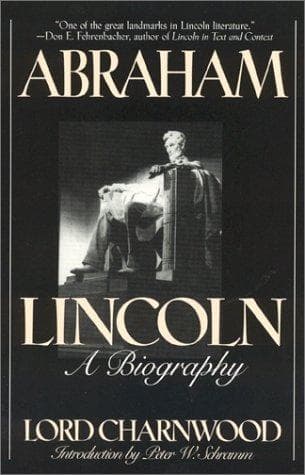
Abraham LincolnCharnwood, Godfrey Rathbone Benson, Baron
History
Abraham Lincoln
Charnwood, Godfrey Rathbone Benson, Baron
Lincoln, Abraham, 1809-1865; Presidents -- United States -- Biography
mouth, for Stanton snuffed him out with supreme contempt, and he
returned home crestfallen. Stanton before the war was a strong
Democrat, but hated slavery. In the last days of Buchanan's Presidency
he was made Attorney-General and helped much to restore the lost credit
of that Administration. He was now in Washington, criticising the slow
conduct of the war with that explosive fury and scorn which led him to
commit frequent injustice (at the very end of the war he publicly and
monstrously accused Sherman of being bribed into terms of peace by
Southern gold), which concealed from most eyes his real kindness and a
lurking tenderness of heart, but which made him a vigorous
administrator intolerant of dishonesty and inefficiency. He was more
contemptuous of Lincoln than ever, he would constantly be denouncing
his imbecility, and it is incredible that kind friends were wanting to
convey his opinion to Lincoln. Lincoln made him Secretary of War.
Since the summer, to the impatient bewilderment of the Northern people,
of Congress, now again in session, and of the President himself, their
armies in the field were accomplishing just nothing at all, and, as
this agitating year, 1861, closed, a deep gloom settled on the North,
to be broken after a while by the glare of recurrent disaster.
CHAPTER IX
THE DISASTERS OF THE NORTH
1. _Military Policy of the North_.
The story of the war has here to be told from the point of view of the
civilian administrator, the President; stirring incidents of combat and
much else of interest must be neglected; episodes in the war which
peculiarly concerned him, or have given rise to controversy about him,
must be related lengthily. The President was an inexperienced man. It
should be said, too--for respect requires perfect frankness--that he
was one of an inexperienced people. The Americans had conquered their
independence from Great Britain at the time when the ruling factions of
our country had reached their utmost degree of inefficiency. They had
fought an indecisive war with us in 1812-14, while our main business
was to win at Salamanca and Vittoria. These experiences in some ways
warped American ideas of war and politics, and their influence perhaps
survives to this day. The extent of the President's authority and his
position in regard to the advice he could obtain have been explained.
An examination of the tangle in which military policy was first
involved may make the chief incidents of the war throughout easier to
follow.
Public-domain text, read in full here on John Shaqi.
Reviews
Reviews
No reviews yet
Be the first to share your thoughts on this work.
Elsewhere in the archive
Join the Discussion
Join the discussion
Sign in to leave a comment or review.
Sign InorCreate an account