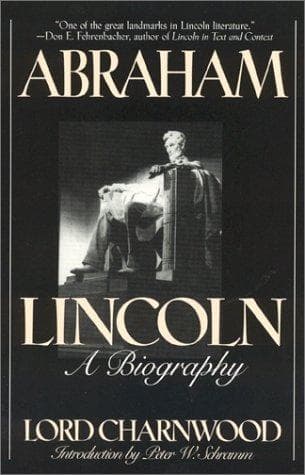
Abraham LincolnCharnwood, Godfrey Rathbone Benson, Baron
History
Abraham Lincoln
Charnwood, Godfrey Rathbone Benson, Baron
Lincoln, Abraham, 1809-1865; Presidents -- United States -- Biography
intention of yielding to it till there was a real prospect that a change
of generals would be a change for the better. When the appointment of
Thomas was proposed there really was such a prospect. When Rosecrans was
eventually put in Buell's place the result was disappointing to Lincoln,
but it was evidently not a bad appointment, and a situation had then
arisen in which it would have been folly to retain Buell if any capable
successor to him could be found; for the Governors of Indiana, Ohio and
Illinois, of whom the first named was reputed the ablest of the "war
Governors" in the West, and on whom his army depended for recruits, now
combined in representations against him which could not be ignored.
Lincoln, who could not have personal acquaintance with the generals of
the Western armies as he had with those in the East, was, it should be
observed, throughout unceasing in his efforts to get the fullest and
clearest impression of them that he could; he was always, as it has been
put, "taking measurements" of men, and a good deal of what seemed idle
and gossipy talk with chance visitors, who could tell him little
incidents or give him new impressions, seems to have had this serious
purpose. For the first half of the war the choice of men for high
commands was the most harassing of all the difficulties of his
administration. There is no doubt of his constant watchfulness to
discern and promote merit. He was certainly beset by the feeling that
generals were apt to be wanting in the vigour and boldness which the
conduct of the war demanded, but, though this in some cases probably
misled him, upon the whole there was good reason for it. On the other
hand, it must be considered that all this while he knew himself to be
losing influence through his supposed want of energy in the war, and that
he was under strong and unceasing pressure from every influential quarter
to dismiss every general who caused disappointment. Newspapers and
private letters of the time demonstrate that there was intense impatience
against him for not producing victorious generals. This being so, his
own patience in this matter and his resolution to give those under him a
fair chance appear very remarkable and were certainly very wise.
Public-domain text, read in full here on John Shaqi.
Reviews
Reviews
No reviews yet
Be the first to share your thoughts on this work.
Elsewhere in the archive
Join the Discussion
Join the discussion
Sign in to leave a comment or review.
Sign InorCreate an account