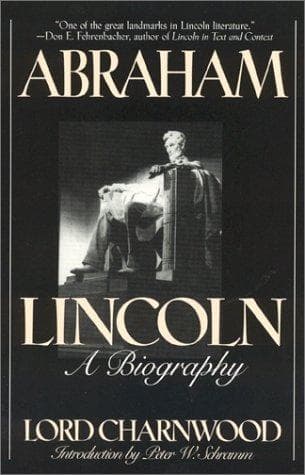
Abraham LincolnCharnwood, Godfrey Rathbone Benson, Baron
History
Abraham Lincoln
Charnwood, Godfrey Rathbone Benson, Baron
Lincoln, Abraham, 1809-1865; Presidents -- United States -- Biography
Southern leaders was conducted on the footing that the Union should be
restored. But his character inspired no respect. Burnside, now
commanding the troops in Ohio, held that violent denunciation of the
Government in a tone that tended to demoralise the troops was treason,
since it certainly was not patriotism, and when in May, 1863,
Vallandigham made a very violent and offensive speech in Ohio he had him
arrested in his house at night, and sent him before a court-martial which
imprisoned him. Loud protest was raised by every Democrat. This worry
came upon Lincoln just after Chancellorsville. He regretted Burnside's
action--later on he had to reverse the rash suppression of a newspaper by
which Burnside provoked violent indignation--but on this occasion he
would only say in public that he "regretted the necessity" of such
action. Evidently he thought it his duty to support a well-intentioned
general against a dangerous agitator. The course which after some
consideration he took was of the nature of a practical joke, perhaps
justified by its success. Vallandigham was indeed released; he was taken
to the front and handed over to the Confederates as if he had been an
exchanged prisoner of war. In reply to demands from the Democratic
organisation in Ohio that Vallandigham might be allowed to return home,
Lincoln offered to consent if their leaders would sign a pledge to
support the war and promote the efficiency of the army. This they called
an evasion. Vallandigham made his way to Canada and conducted intrigues
from thence. In his absence he was put up for the governorship of Ohio
in November, but defeated by a huge majority, doubtless the larger
because of Gettysburg and Vicksburg. The next year he suddenly returned
home, braving the chance of arrest, and, probably to his disappointment,
Lincoln let him be. In reply to protests against Vallandigham's arrest
which had been sent by meetings in Ohio and New York, Lincoln had written
clear defences of his action, from which the foregoing account of his
views on martial law has been taken. In one of them was a sentence which
probably went further with the people of the North than any other: "Must
I shoot a simple-minded soldier boy who deserts, while I must not touch a
hair of a wily agitator who induces him to desert?" There may or may not
be some fallacy lurking here, but it must not be supposed that this
sentence came from a pleader's ingenuity. It was the expression of a man
really agonised by his weekly task of confirming sentences on deserters
from the army.
Public-domain text, read in full here on John Shaqi.
Reviews
Reviews
No reviews yet
Be the first to share your thoughts on this work.
Elsewhere in the archive
Join the Discussion
Join the discussion
Sign in to leave a comment or review.
Sign InorCreate an account