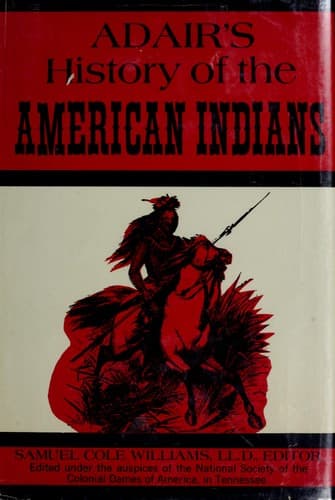
Adair's History of the American IndiansAdair, James
History
Adair's History of the American Indians
Adair, James
Indians -- Origin; Indians of North America -- Southern States
Till the 70 years captivity commenced, (according to Dr. Prideaux, 606
years before the Christian æra) the Israelites had only numeral names
for the solar and lunar months, except אביב and האתנים; the former
signifies a green ear of corn; and the latter, robust, or valiant. And
by the first {76} name, the Indians, as an explicative, term their
_passover_, which the trading people call the green-corn dance. As the
Israelites were a sensual people, and generally understood nothing but
the shadow, or literal part of the law; so the Indians closely imitate
them, minding only that traditional part, which promised them a
delicious land, flowing with milk and honey. The two Jewish months just
mentioned, were æquinoctial. Abib, or their present Nisan, was the
seventh of the civil, and the first of the ecclesiastical year,
answering to our March and April: and Ethanim, which began the civil
year, was the seventh of that of the ecclesiastical, the same as our
September and October. And the Indians name the various seasons of the
year, from the planting, or ripening of the fruits. The green-eared moon
is the most beloved, or sacred,—when the first fruits become sanctified,
by being annually offered up. And from this period they count their
beloved, or holy things.
When they lack a full moon, or when they travel, they count by sleeps;
which is a very ancient custom—probably, from the Mosaic method of
counting time, “that the evening and the morning were the first day.”
Quantity they count by tens, the number of their fingers; which is a
natural method to all people. In the mercantile way, they mark on the
ground their numbers, by units; or by X for ten; which, I presume they
learned from the white people, who traded with them. They readily add
together their tens, and find out the number sought. They call it
_Yakâ-ne Tlápha_, or “scoring on the ground.” But _old time_ they can no
way trace, only by remarkable circumstances, and æras. As they trade
with each other, only by the hand, they have no proper name for a pound
weight.
The Cheerake count as high as an hundred,[30] by various numeral names;
whereas the other nations of East and West-Florida, rise no higher than
the decimal number, adding units after it, by a conjunction copulative;
which intimates, that nation was either more mixed, or more skilful,
than the rest: the latter seems most probable. They call a thousand,
_Skoeh Chooke Kaiére_, “the old,” or “the old one’s hundred:” and so do
the rest, in their various dialects, by interpretation; which argues
their former skill in numbers. {77}
Public-domain text, read in full here on John Shaqi.
Reviews
Reviews
No reviews yet
Be the first to share your thoughts on this work.
Elsewhere in the archive
Join the Discussion
Join the discussion
Sign in to leave a comment or review.
Sign InorCreate an account