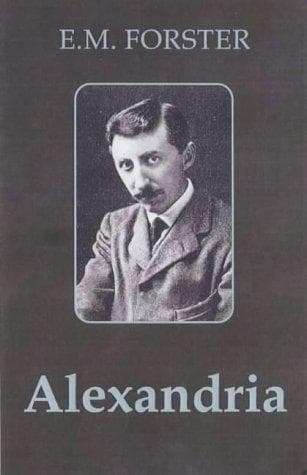
Alexandria: A History and a GuideForster, E. M. (Edward Morgan)
History
Alexandria: A History and a Guide
Forster, E. M. (Edward Morgan)
Alexandria (Egypt) -- Guidebooks; Alexandria (Egypt) -- History
The closing years of his reign were divided between his mistresses and
the gout. During a respite from the latter he looked out of his palace
window on some public holiday, and saw beneath him the natives
picnicking on the sand, as they do at the feast of Shem-el-Nessem
to-day. They were obscure, they were happy. “Why can I not be like
them?” sighed the old king, and burst into tears. His reign had been
imposing rather than beautiful and had initiated little in Alexandrian
civilization beyond the somewhat equivocal item of a mystic marriage. He
could endow and patronise. But, unlike Alexander, unlike his father, he
could not create. He completed what they had laid down, and appropriated
the praise.
Ptolemy Euergetes (Well-doer) was the son of Philadelphus by his first
wife. In character he resembled his grandfather. He was a sensible and
successful soldier, with a taste for science. By marrying his cousin
Berenice, he secured Cyrene which had lapsed—Berenice the most highly
praised of all the Ptolemaic Queens, though we know nothing of her
character. In their reign the power of Egypt and the splendour of
Alexandria came to their height. It is now time to examine that
splendour. One hundred years have passed since Alexander laid the
foundations. What has been built upon them?
COINS OF FIRST THREE PTOLEMIES: Museum, Room 3.
INSCRIPTIONS: Museum, Rooms 6, 22.
PTOLEMY EUERGETES, STATUES: Museum, Room 12.
BERENICE, STATUES: Museum, Rooms 4, 12.
THE PTOLEMAIC CITY.
(_See Map of Ancient City p._ 98).
The following were the most important buildings in the Ptolemaic city.
(i). THE LIGHTHOUSE.
The Egyptian coast, being mainly alluvial, is difficult to sight from
the sea. It was therefore imperative to indicate, by some great
monument, where the new city stood. It was desirable too to provide a
guide for sailors through the limestone reefs that line the shore. For
these reasons the Ptolemies built a lighthouse over four hundred feet
high on the Eastern end of Pharos Island (present Fort Kait Bey). Full
details are given later (p. 132); here it is enough to note that the
Pharos (as it was called) was the greatest practical achievement of the
Alexandrian mind and the outward expression of the mathematical studies
carried on in the Mouseion; Sostratus, its architect, was contemporary
with Eratosthenes and Euclid.
Public-domain text, read in full here on John Shaqi.
Reviews
Reviews
No reviews yet
Be the first to share your thoughts on this work.
Join the Discussion
Join the discussion
Sign in to leave a comment or review.
Sign InorCreate an account