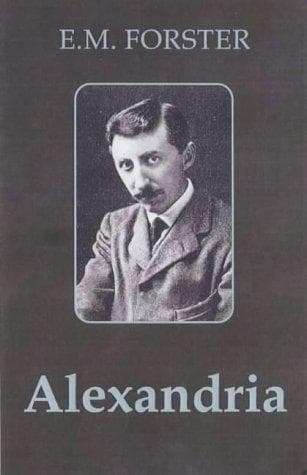
Alexandria: A History and a GuideForster, E. M. (Edward Morgan)
History
Alexandria: A History and a Guide
Forster, E. M. (Edward Morgan)
Alexandria (Egypt) -- Guidebooks; Alexandria (Egypt) -- History
A fortress as well as a beacon, the Pharos was the pivot of the city’s
naval defences. It dominated both the harbours, and kept special watch
over the more precious of them—the Eastern, which held the Royal fleet.
Here the promontory of the Palace stretched towards it. Westward, it
could signal over the other harbour to the Chersonese (present Fort
Agame). And further west, the system was prolonged into a long line of
watch towers and beacons that studded the north African coast, and
connected Egypt with her daughter kingdom of Cyrene. One of these towers
(that at Abousir) still remains, and shows in miniature what the Pharos
must once have been.
FORT KAIT BEY (Pharos): p. 132
COINS ILLUSTRATING PHAROS: Museum, Room 2.
TOWER OF ABOUSIR: p. 102
(ii). THE PALACE.
We can locate one point in the Palace, or rather palace-system: it
certainly covered the Promontory of Silsileh, which was then both longer
and broader than now. But no one knows how far the buildings stretched
inland, or along the shore, nor what the architecture was. Each Ptolemy
made additions, and the whole formed a special quarter, somewhat like
the Imperial City at Pekin. Egypt being an autocracy, the palace was the
seat of government as well as royal residence; clerks had their offices
there. There was a palace-harbour (left of Silsileh), and an Island
Palace or Kiosk called Antirrhodus, which rivalled the glories of
Rhodes; Antirrhodus lay in the Eastern Harbour, and rocks, now deep
below the surface of the sea, have been identified with it.
Inland, the Palace connected with another great system—that of the
Mouseion. On its seaward side, it was prolonged by breakwaters towards
the Pharos.
SILSILEH (Site of Palace): p. 163
COLUMNS FROM LOCALITY: Museum, Room 16.
(iii). THE MOUSEION.
The Mouseion at Alexandria was the great intellectual achievement of the
dynasty. Not only did it mould the literature and science of its day,
but it has left a permanent impress upon thought. Its buildings have all
disappeared, and the very site is conjectural; perhaps it had a facade
opposite the Soma, west of the present Rue Nebi Daniel. In its vast
areas were lecture halls, laboratories, observatories, a library, a
dining hall, a park, and a zoo.
Public-domain text, read in full here on John Shaqi.
Reviews
Reviews
No reviews yet
Be the first to share your thoughts on this work.
Join the Discussion
Join the discussion
Sign in to leave a comment or review.
Sign InorCreate an account