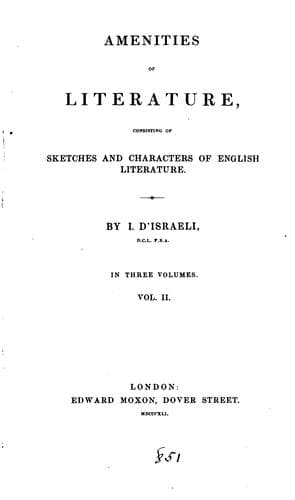
Amenities of Literature: Consisting of Sketches and Characters of English LiteratureDisraeli, Isaac
History
Amenities of Literature: Consisting of Sketches and Characters of English Literature
Disraeli, Isaac
Authors, English -- Biography; English literature -- History and criticism; Great Britain -- Intellectual life
As the scheme was managed, therefore, it was a compromise or
co-partnership of the king and his courtiers. The lands now lie the open
prey of the hardy claimant or the sly intriguer; crowds of suppliants
wearied the crown to participate in that national spoliation. Every one
hastened to urge some former service, or some present necessity, as a
colourable plea for obtaining a grant of some of the suppressed lands. A
strange custom was then introduced, that of "begging for an estate."
Kneeling to the king, and specifying some particular lands, was found a
convenient method to acquire them; and these royal favours were
sometimes capriciously and even ludicrously bestowed. Fuller has a
pleasant tale concerning one Master Champernoun. One day, observing two
or three gentlemen waiting at a door through which the king was to pass,
he was inquisitive to learn their suit, which they refused to tell. On
the king's appearance, they threw themselves on their knees, and
Champernoun was prompt in joining them, with an implicit faith, says
Fuller, that courtiers never ask anything hurtful to themselves. They
were begging for an estate. The king granted their petition. On this
Champernoun claimed his share of the largesse; they remonstrated that he
had never come to beg with them; he appealed to the king, and his
brother beggars were fain to allot him the considerable priory of St.
Germains, which he sold to the ancestor of the present possessor, the
Earl of St. Germains.
The king was prodigal in his grants; for the more he multiplied the
receivers of his bounties, the more numerous would be the stanch
defenders of their new possessions:[1] gratitude was the least of their
merits. He counted on their resolution and their courage. The bait was
relishing, and there were some, when land-grants became more scarce,
whose voracity of reformation attempted to snatch at the lands of the
universities, which had certainly gone had not Henry's love of
literature protected their trembling colleges. We have his majesty's own
words, in replying to the suggestion of some hungry courtier:--"Ha!
sirrah! I perceive the abbey-lands have fleshed you, and set your teeth
on edge, to ask also those colleges. We pulled down sin by defacing the
monasteries; but you desire to throw down all goodness by subversion of
colleges. I tell you, sir, that I judge no land in England better
bestowed than on our universities, which shall maintain our realm when
we be dead and rotten. Follow no more this vein; but content yourselves
with what you have already, or else seek honest means whereby to
increase your worldhoods."
Public-domain text, read in full here on John Shaqi.
Reviews
Reviews
No reviews yet
Be the first to share your thoughts on this work.
Elsewhere in the archive
Join the Discussion
Join the discussion
Sign in to leave a comment or review.
Sign InorCreate an account