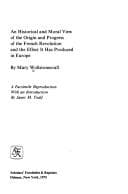
An historical and moral view of the origin and progress of the French Revolution; and the effect it has produced in EuropeWollstonecraft, Mary
Philosophy
An historical and moral view of the origin and progress of the French Revolution; and the effect it has produced in Europe
Wollstonecraft, Mary
France -- History -- Revolution, 1789-1799 -- Causes
Such were the measures pursued to exasperate a people beginning to open
their eyes, and now clamourously demanding the restitution of their
long-estranged rights; when the court, having in vain attempted to
terrify or deceive them, found it expedient to still the storm by
recalling Necker. This man had the confidence of France, which he in
some degree merited for the light he had thrown on the state of the
revenue, and for the system of economy, that he had endeavoured to adopt
during his former administration: but unfortunately he did not possess
talents or political sagacity sufficient to pilot the state in this
perilous season. Bred up in a counting-house, he acquired that knowledge
of detail, and attention to little advantages, so necessary when a man
desires to amass riches with what is termed a fair character: and,
having accumulated a very large fortune by unremitting industry; or, to
borrow the commercial phrase, _attention to the main chance_, his house
became the resort of the men of letters of his day.
The foibles of a rich man are always fostered, sometimes perhaps
insensibly, by his numerous dependents and visitants, who find his table
amusing or convenient. It is not then surprizing, that, with the
abilities of a tolerable financier, he was soon persuaded, that he was a
great author, and consummate statesman. Besides, when the manners of a
nation are very depraved, the men who wish to appear, and even to be,
more moral than the multitude, in general become pedantically virtuous;
and, continually contrasting their morals with the thoughtless vices
around them, the artificial, narrow character of a sectary is formed;
the manners are rendered stiff, and the heart cold. The dupes also of
their flimsey virtue, many men are harshly called hypocrites, who are
only weak; and popularity often turns the head giddy, that would have
soberly fulfilled the common duties of a man in the shade of private
life.
Having adopted with a timid hand many of the sagacious plans of his
model, the clear headed, unaffected Turgot, Necker was considered by the
greater part of the nation as a consummate politician: neither was it
surprizing, that the people, snatched from despondency, should have
mistaken the extent of his political knowledge, when they had estimated
it by that of the greatest statesman, which France, or, perhaps, any
other country, ever produced.
Public-domain text, read in full here on John Shaqi.
Reviews
Reviews
No reviews yet
Be the first to share your thoughts on this work.
Join the Discussion
Join the discussion
Sign in to leave a comment or review.
Sign InorCreate an account