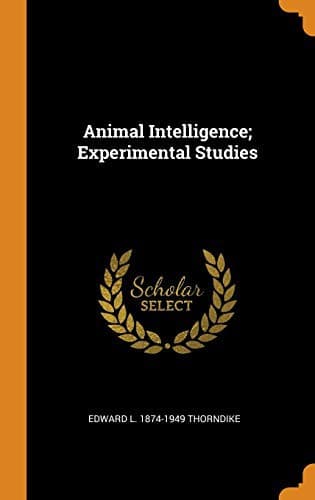
Animal intelligence: Experimental studies — John Shaqi
Animal intelligence: Experimental studiesThorndike, Edward L. (Edward Lee)
Science
Animal intelligence: Experimental studies
Thorndike, Edward L. (Edward Lee)
Animal intelligence; Psychology, Comparative
There are also certain pseudo-imitative or semi-imitative phenomena which
ought to be considered by themselves. For example, the rapid loss of
the fear of railroad trains or telegraph wires among birds, the rapid
acquisition of arboreal habits among Australian rodents, the use of
proper feeding grounds, etc., may be held to be due to imitation. The
young animal stays with or follows its mother from a specific instinct to
keep near that particular object, to wit, its mother. It may thus learn
to stay near trains, or scramble up trees, or feed at certain places and
on certain plants. Actions due to following pure and simple may thus
simulate imitation. Other groups of acts which now seem truly imitative
may be indirect fruits of some one instinct. This must be kept in mind
when one estimates the supposed imitation of parents by young. Further,
it is certain that in the case of the chick, where early animal life has
been carefully observed, instinct and individual experience between them
rob imitation of practically all its supposed influence. Chicks get along
without a mother very well. Yet no mother takes more care of her children
than the hen. Care in other cases, then, need not mean instruction
through imitation.
These considerations may prevent an unreserved acceptance of the common
view that young animals get a great number of their useful habits from
imitation, but I do not expect or desire them to lead to its summary
rejection. I should not now myself reject it, though I think it quite
possible that more investigation and experiment may finally reduce all
the phenomena of so-called imitation of parents by young to the level of
indirect results of instinctive acts.
Another special department of imitation may be at least vaguely marked
off: namely, apparent imitation of certain limited sorts of acts which
are somewhat frequent in the animal’s life. An example will do better
than further definition.
Public-domain text, read in full here on John Shaqi.
Reviews
Reviews
No reviews yet
Be the first to share your thoughts on this work.
Join the Discussion
Join the discussion
Sign in to leave a comment or review.
Sign InorCreate an account