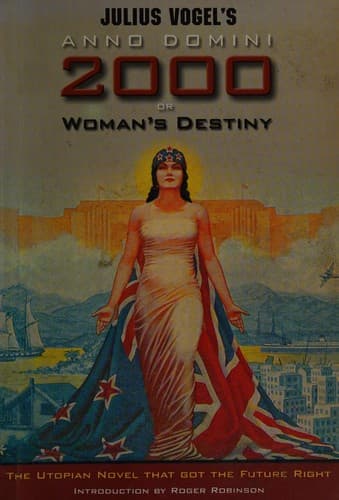
Anno Domini 2000; or, Woman's DestinyVogel, Julius, Sir
Science
Anno Domini 2000; or, Woman's Destiny
Vogel, Julius, Sir
Feminist fiction; New Zealand -- Fiction; Two thousand, A.D. -- Fiction; Utopian fiction; Utopias -- Fiction; Women -- Fiction
pleasanter task when it ceased to be purchased at the expense of the
comfort of the working classes.
The customs duties belonged to the separate Governments that collected
them, and the quarter-income tax and succession duties were equally
divided between the Imperial and the Dominion Governments. Thus the
friction between them was minimised. The Imperial Government and the
Dominion Governments both enjoyed during most years far more revenue
than they required, and so large a reserve fund was accumulated that no
inconvenience was felt in years of depression. Part of the surplus
revenues arising from the reserve fund was employed in large educational
and benevolent works and undertakings. The result of the system was that
pecuniary suffering in all directions was at an end; but the ambition to
acquire wealth, with its concomitant powers, was in no degree abated.
Of course there was not universal content--such a condition would be
impossible--but the controversies were, as a rule, less bitter than the
former ones which prevailed between different classes. The man-and-woman
struggle was one of the large points of constant difference, and again
there was much difference of opinion as to whether the quarter-income
and succession duties might be reduced to a fifth. It was argued, on the
one hand, that the reserve funds were becoming too large, and that the
present generation was working too much for its successors. On the other
hand, it was urged that the present generation in working for its
successors was merely perpetuating the gift which it had inherited, and
that by preserving the reserve funds great strength was given to contend
against any reverses that the future might have in store. Another point
of controversy was the strength of the naval and military forces. A
comparatively small school of public men argued that the cost and
strength might be materially reduced without risk or danger, but the
general feeling was not with them.
This has been a long digression, but it was necessary to the
comprehension of our story. It will easily be understood from what has
been said that, supposing the alleged action of Lord Reginald was
dictated by revenge, it was difficult to see, unless he resorted to
treasonable efforts, what satisfaction he could derive from any
agitation.
Public-domain text, read in full here on John Shaqi.
Reviews
Reviews
No reviews yet
Be the first to share your thoughts on this work.
Join the Discussion
Join the discussion
Sign in to leave a comment or review.
Sign InorCreate an account