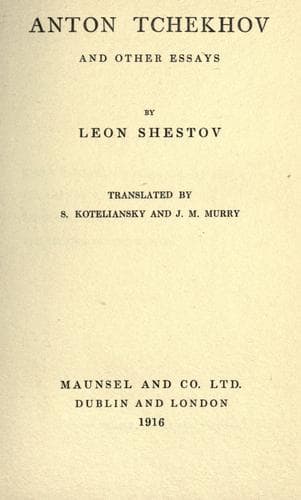
Chekhov, Anton Pavlovich, 1860-1904; Dostoyevsky, Fyodor, 1821-1881; Philosophy; Russian literature -- History and criticism
Doctor Lvov, the representative of the all-powerful, sovereign idea,
feels that his sovereign's majesty is injured, that to suffer such
an offence really means to abdicate the throne. Surely Ivanov was a
vassal, and so he must remain. How dare he let his tongue advise, how
dare he raise his voice when it is his part to listen reverently, and
to obey in silent resignation? This is rank rebellion! Lvov attempts to
draw himself up to his full height and answer the arrogant rebel with
dignity. Nothing comes of it. In a weak, trembling voice he mutters the
accustomed words, which but lately had invincible power. But they do
not produce their customary effect. Their virtue is departed. Whither?
Lvov dares not own it even to himself. But it is no longer a secret
to any one. Whatever mean and ugly things Ivanov may have done--Tchekhov
is not close-fisted in this matter: in his hero's conduct-book
are written all manner of offences; almost to the deliberate murder
of a woman devoted to him--it is to him and not to Lvov that public
opinion bows. Ivanov is the spirit of destruction, rude, violent,
pitiless, sticking at nothing: yet the word 'scoundrel,' which the
doctor tears out of himself with a painful effort and hurls at him,
does not stick to him. He is somehow right, with his own peculiar
right, to others inconceivable, yet still, if we may believe Tchekhov,
incontestable. Sasha, a creature of youth and insight and talent,
passes by the honest Starodoum-Lvov unheeding, on her way to render
worship to him. The whole play is based on that. It is true, Ivanov in
the end shoots himself, and that may, if you like, give you a formal
ground for believing that the final victory remained with Lvov. And
Tchekhov did well to end the drama in this way--it could not be spun
out to infinity. It would have been no easy matter to tell the whole of
Ivanov's history. Tchekhov went on writing for fifteen years after, all
the time telling the unfinished story, yet even then he had to break it
off without reaching the end....
Public-domain text, read in full here on John Shaqi.
Reviews
Reviews
No reviews yet
Be the first to share your thoughts on this work.
Join the Discussion
Join the discussion
Sign in to leave a comment or review.
Sign InorCreate an account