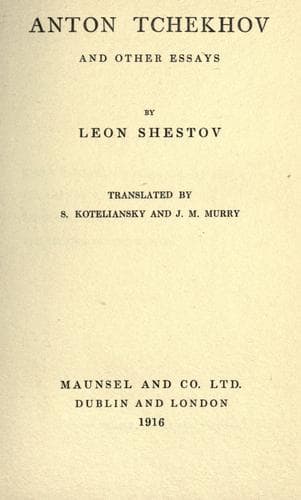
Chekhov, Anton Pavlovich, 1860-1904; Dostoyevsky, Fyodor, 1821-1881; Philosophy; Russian literature -- History and criticism
There were sober epochs when the pursuit of positive
knowledge absorbed every one capable of intellectual labour. Or perhaps
there were epochs in which men who sought something other than positive
science were condemned to universal contempt, and passed unregarded: in
such an epoch Plato would have found no sympathy, but would have died
in obscurity. One thing at least is clear. He whose chief interest
and motive in life is in undemonstrable truths is doomed to complete
or relative sterility in the sense in which the word is generally
understood. If he is clever and gifted, men may perhaps be interested
in his mind and talent, but they will pass his work with indifference,
contempt, and even horror; and they will begin to warn the world
against him.
'Look at him, my children,
He is stern and pale and lean.
He is poor and naked,
And all men count him mean.'
Has not the work of the prophets who sought for ultimate truths been
barren and useless? Did life hold them in any account? Life went its
own way, and the voices of the prophets have been, are, and ever
will be, voices in the wilderness. For that which they see and know,
cannot be proved and is not capable of proof. Prophets have always
been isolated, dissevered, separate, helpless men, locked up in their
pride. Prophets are kings without an army. For all their love to their
subjects, they can do nothing for them, for subjects respect only those
kings who possess a formidable military power. And--long may it be so!
_The Limits of Reality_
Public-domain text, read in full here on John Shaqi.
Reviews
Reviews
No reviews yet
Be the first to share your thoughts on this work.
Elsewhere in the archive
Join the Discussion
Join the discussion
Sign in to leave a comment or review.
Sign InorCreate an account