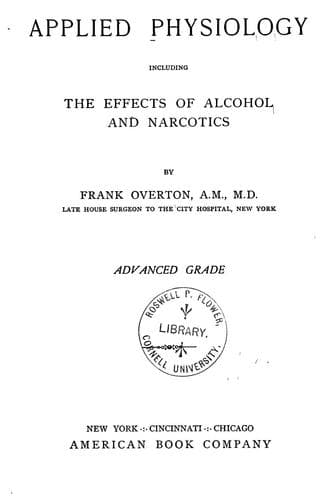
Applied Physiology, Including the Effects of Alcohol and Narcotics — John Shaqi
Applied Physiology, Including the Effects of Alcohol and NarcoticsOverton, Frank
Science
Applied Physiology, Including the Effects of Alcohol and Narcotics
Overton, Frank
Physiology
We are sweating all the time, but the sweat usually dries as fast as
it forms. When we are too warm it comes out faster than it dries. On a
winter's day we sweat only a little, and so we save the heat. But more
heat passes off from the skin into the cold air, and we do not grow
warmer.
=109. Clothes.=--We wear clothes to keep the heat in the body. They do
not make heat, but they keep it from going off. Wool and flannel
clothes keep the heat in better than cotton. We wear woolen in the
winter, and cotton in the summer.
Fur keeps in heat the best of all. In very cold lands only fur is worn.
Linen lets heat out easily. It makes good summer clothes.
=110. Where to wear the most clothes.=--The face and hands are kept
warm by the blood and we do not cover them except in the coldest
weather. Our feet are more tender and need to be covered enough to
keep them warm. We ought to wear thick-soled shoes or rubbers in damp
weather so as to keep the feet dry and warm. We ought to dry the
stockings every night, for they will get wet with sweat.
The trunk of the body needs the most clothes. The legs ought to be
kept warm, too. If the dress reaches only to the knee, thick
underclothing is needed for the lower part of the leg.
Do not keep one part of the body warm while another part remains cold.
It is wrong to bundle the neck or wear too much clothing over any part
of the body. It is also wrong to wear too little and be cold.
When you are moving about, you need less clothing than when you are
sitting still. When you have worked until you are very warm, it is
wrong to stop to cool off. When you stop, you ought to put on a thick
coat or else go into the house. If you do not, you may be chilled and
made weak so that you can easily catch cold or some other disease.
=111. Heating houses.=--In winter our bodies cannot make heat fast
enough to keep us warm unless we put on a great deal of clothing. So
we warm our houses. Our grandfathers used fireplaces, but these did
not give out much heat. People now use stoves, but some use a furnace
in the cellar, or heat the rooms by steam. Some use kerosene stoves,
but they are not so good, for they make the air bad. A room should
feel neither too warm nor too cold. It is of the right warmth when we
do not notice either heat or cold.
=112. Change of air.=--After air has been breathed it is no longer fit
for use. In an hour or two you would breathe all the air of a small room
once if it were not changed. When the air is partly used, you feel dull
and short of breath, and your head aches. As soon as you get out of
doors, you feel better. Foul air of houses and meeting places often
contains disease germs. It is necessary to change the air of all rooms
often. You can do this by opening a door or window. It is a good plan to
sleep with your bedroom window open, so as to get good air all night.
Public-domain text, read in full here on John Shaqi.
Reviews
Reviews
No reviews yet
Be the first to share your thoughts on this work.
Join the Discussion
Join the discussion
Sign in to leave a comment or review.
Sign InorCreate an account