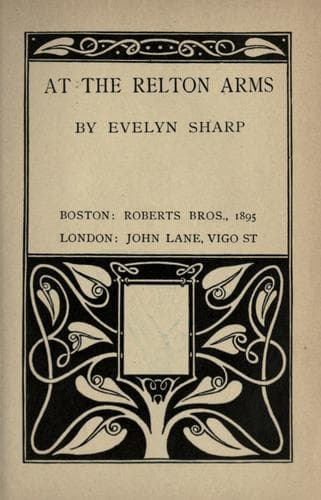
England -- Social life and customs -- 19th century -- Fiction
And a laugh, in which derision was plainly discernible, rang out to
bear testimony to her words. She evidently did not realize the serious
nature of the assemblage in which she found herself, and Mrs. Reginald
acquired a distinct antipathy for her when she leaned back in her chair
carelessly, and proceeded to argue with Digby as though he were any
ordinary young man, with no ideas, and no studio, and no deep and hidden
tragedy in his life which could be alluded to darkly whenever the topic
of conversation required it. And no one in the room could forgive her
when the musician threw himself on the chair at her side, and
condescended to parry her objections as though he thoroughly enjoyed the
attack she was daring to make upon his favorite principles.
"Do you not see that the language of painting is limited?" he cried. "It
has told us all it had to tell; it is not adapted to modern needs and
modern craving, though the impressionists have made a fine attempt, a
noble attempt, to make it express more than it can. Do you not see that
while music is purely spiritual, purely intellectual, painting is a mere
imitation of the common objects of nature?"
"Man and woman being among the common objects?" murmured the girl. But
he did not heed her tiresomely obvious remark, and plunged onwards.
"Is not art finer, ten times finer than nature? You cannot see below the
surface, you painters who copy nature, poor ignorant nature, who is only
on the threshold of knowledge herself. You say you can paint a tree; but
when it is done, what is it? A tree!"
"No, it is not only the tree," objected the other, "it is the picture in
the artist's mind that the tree makes. When you and I look at a tree we
see two different things,--apparently; and as I live in the country most
of the year, I am thankful I am not a musician. Voilà tout!"
"But even then? You can put into your picture none of the workings of
the human mind, none of the aspirations of the human soul. When you
have a great happiness or a great sorrow, does it help you to paint your
pictures? No, no, your painting is apart from your existence, your mind
has no place there. In the future we shall have but one art, and that
art will be music!"
"Oh, Mr. Raleigh!" laughed the girl, "you are making a world for one
kind of people. What will happen to the poor luckless ones like myself
who are not musical? I suppose there will have to be some in your
world?"
"Je n'en vois pas la nécessité," said the musician, relaxing into a
laugh too; but Mrs. Routh, who had never read Voltaire, thought it was
quite time to interfere when she could not even understand what they
were saying, and she dropped her parasol. Digby stooped to pick it up,
and she asked him promptly to play something.
The spell was broken, and the chorus round the room echoed the request.
The musician smiled in a forced manner, and said he would play the
thirty-seven variations of Beethoven.
"Oh, no, something of your own," begged the chorus.
Public-domain text, read in full here on John Shaqi.
Reviews
Reviews
No reviews yet
Be the first to share your thoughts on this work.
Join the Discussion
Join the discussion
Sign in to leave a comment or review.
Sign InorCreate an account