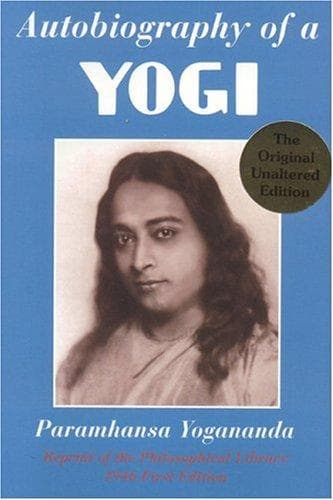
Yogananda, Paramahansa, 1893-1952; Yogis -- India -- Biography
The ancient rishi Patanjali defines “yoga” as “control of the
fluctuations of the mind-stuff.” {FN24-4} His very short and masterly
expositions, the YOGA SUTRAS, form one of the six systems of Hindu
philosophy. {FN24-5} In contradistinction to Western philosophies,
all six Hindu systems embody not only theoretical but practical
teachings. In addition to every conceivable ontological inquiry,
the six systems formulate six definite disciplines aimed at the
permanent removal of suffering and the attainment of timeless bliss.
The common thread linking all six systems is the declaration that
no true freedom for man is possible without knowledge of the ultimate
Reality. The later UPANISHADS uphold the YOGA SUTRAS, among the six
systems, as containing the most efficacious methods for achieving
direct perception of truth. Through the practical techniques of
yoga, man leaves behind forever the barren realms of speculation
and cognizes in experience the veritable Essence.
The YOGA system as outlined by Patanjali is known as the Eightfold
Path. The first steps, (1) YAMA and (2) NIYAMA, require observance
of ten negative and positive moralities-avoidance of injury to others,
of untruthfulness, of stealing, of incontinence, of gift-receiving
(which brings obligations); and purity of body and mind, contentment,
self-discipline, study, and devotion to God.
The next steps are (3) ASANA (right posture); the spinal column
must be held straight, and the body firm in a comfortable position
for meditation; (4) PRANAYAMA (control of PRANA, subtle life currents);
and (5) PRATYAHARA (withdrawal of the senses from external objects).
The last steps are forms of yoga proper: (6) DHARANA (concentration);
holding the mind to one thought; (7) DHYANA (meditation), and (8)
SAMADHI (superconscious perception). This is the Eightfold Path
of Yoga {FN24-6} which leads one to the final goal of KAIVALYA
(Absoluteness), a term which might be more comprehensibly put as
“realization of the Truth beyond all intellectual apprehension.”
“Which is greater,” one may ask, “a swami or a yogi?” If and when
final oneness with God is achieved, the distinctions of the various
paths disappear. The BHAGAVAD GITA, however, points out that the
methods of yoga are all-embracive. Its techniques are not meant only
for certain types and temperaments, such as those few who incline
toward the monastic life; yoga requires no formal allegiance.
Because the yogic science satisfies a universal need, it has a
natural universal applicability.
A true yogi may remain dutifully in the world; there he is like
butter on water, and not like the easily-diluted milk of unchurned
and undisciplined humanity. To fulfill one’s earthly responsibilities
is indeed the higher path, provided the yogi, maintaining a mental
uninvolvement with egotistical desires, plays his part as a willing
instrument of God.
Public-domain text, read in full here on John Shaqi.
Reviews
Reviews
No reviews yet
Be the first to share your thoughts on this work.
Elsewhere in the archive
Join the Discussion
Join the discussion
Sign in to leave a comment or review.
Sign InorCreate an account