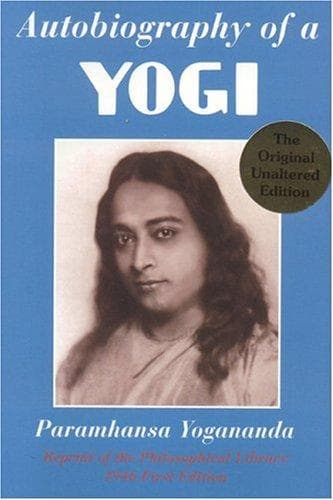
Yogananda, Paramahansa, 1893-1952; Yogis -- India -- Biography
So entrancing is southern India that Mr. Wright and I yearned to
prolong our idyl. But time, in its immemorial rudeness, dealt us no
courteous extensions. I was scheduled soon to address the concluding
session of the Indian Philosophical Congress at Calcutta University.
At the end of the visit to Mysore, I enjoyed a talk with Sir C. V.
Raman, president of the Indian Academy of Sciences. This brilliant
Hindu physicist was awarded the Nobel Prize in 1930 for his important
discovery in the diffusion of light-the “Raman Effect” now known
to every schoolboy.
Waving a reluctant farewell to a crowd of Madras students and
friends, Mr. Wright and I set out for the north. On the way we
stopped before a little shrine sacred to the memory of Sadasiva
Brahman, {FN41-10} in whose eighteenth-century life story miracles
cluster thickly. A larger Sadasiva shrine at Nerur, erected by
the Raja of Pudukkottai, is a pilgrimage spot which has witnessed
numerous divine healings.
Many quaint stories of Sadasiva, a lovable and fully-illumined
master, are still current among the South Indian villagers. Immersed
one day in SAMADHI on the bank of the Kaveri River, Sadasiva was
seen to be carried away by a sudden flood. Weeks later he was found
buried deep beneath a mound of earth. As the villagers’ shovels
struck his body, the saint rose and walked briskly away.
Sadasiva never spoke a word or wore a cloth. One morning the nude
yogi unceremoniously entered the tent of a Mohammedan chieftain. His
ladies screamed in alarm; the warrior dealt a savage sword thrust
at Sadasiva, whose arm was severed. The master departed unconcernedly.
Overcome by remorse, the Mohammedan picked up the arm from the floor
and followed Sadasiva. The yogi quietly inserted his arm into the
bleeding stump. When the warrior humbly asked for some spiritual
instruction, Sadasiva wrote with his finger on the sands:
“Do not do what you want, and then you may do what you like.”
The Mohammedan was uplifted to an exalted state of mind, and
understood the saint’s paradoxical advice to be a guide to soul
freedom through mastery of the ego.
The village children once expressed a desire in Sadasiva’s presence
to see the Madura religious festival, 150 miles away. The yogi
indicated to the little ones that they should touch his body. Lo!
instantly the whole group was transported to Madura. The children
wandered happily among the thousands of pilgrims. In a few hours
the yogi brought his small charges home by his simple mode of
transportation. The astonished parents heard the vivid tales of the
procession of images, and noted that several children were carrying
bags of Madura sweets.
An incredulous youth derided the saint and the story. The following
morning he approached Sadasiva.
“Master,” he said scornfully, “why don’t you take me to the festival,
even as you did yesterday for the other children?”
Public-domain text, read in full here on John Shaqi.
Reviews
Reviews
No reviews yet
Be the first to share your thoughts on this work.
Elsewhere in the archive
Join the Discussion
Join the discussion
Sign in to leave a comment or review.
Sign InorCreate an account