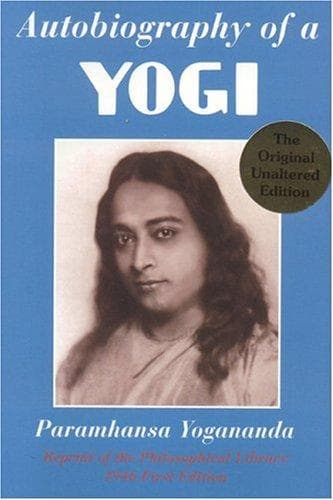
Yogananda, Paramahansa, 1893-1952; Yogis -- India -- Biography
{FN41-9} “Inclusion in one of these four castes originally depended
not on a man’s birth but on his natural capacities as demonstrated
by the goal in life he elected to achieve,” an article in EAST-WEST
for January, 1935, tells us. “This goal could be (1) KAMA, desire,
activity of the life of the senses (SUDRA stage), (2) ARTHA, gain,
fulfilling but controlling the desires (VAISYA stage), (3) DHARMA,
self-discipline, the life of responsibility and right action
(KSHATRIYA stage), (4) MOKSHA, liberation, the life of spirituality
and religious teaching (BRAHMIN stage). These four castes render
service to humanity by (1) body, (2) mind, (3) will power, (4)
Spirit.
“These four stages have their correspondence in the eternal GUNAS
or qualities of nature, TAMAS, RAJAS, and SATTVA: obstruction,
activity, and expansion; or, mass, energy, and intelligence. The four
natural castes are marked by the GUNAS as (1) TAMAS (ignorance), (2)
TAMAS-RAJAS (mixture of ignorance and activity), (3) RAJAS-SATTVA
(mixture of right activity and enlightenment), (4) SATTVA
(enlightenment). Thus has nature marked every man with his caste,
by the predominance in himself of one, or the mixture of two, of the
GUNAS. Of course every human being has all three GUNAS in varying
proportions. The guru will be able rightly to determine a man’s
caste or evolutionary status.
“To a certain extent, all races and nations observe in practice, if
not in theory, the features of caste. Where there is great license
or so-called liberty, particularly in intermarriage between extremes
in the natural castes, the race dwindles away and becomes extinct.
The PURANA SAMHITA compares the offspring of such unions to barren
hybrids, like the mule which is incapable of propagation of its own
species. Artificial species are eventually exterminated. History
offers abundant proof of numerous great races which no longer have
any living representatives. The caste system of India is credited
by her most profound thinkers with being the check or preventive
against license which has preserved the purity of the race and
brought it safely through millenniums of vicissitudes, while other
races have vanished in oblivion.”
{FN41-10} His full title was Sri Sadasivendra Saraswati Swami. The
illustrious successor in the formal Shankara line, Jagadguru Sri
Shankaracharya of Sringeri Math, wrote an inspiring ODE dedicated
to Sadasiva. EAST-WEST for July, 1942, carried an article on
Sadasiva’s life.
CHAPTER: 42
LAST DAYS WITH MY GURU
“Guruji, I am glad to find you alone this morning.” I had just
arrived at the Serampore hermitage, carrying a fragrant burden of
fruit and roses. Sri Yukteswar glanced at me meekly.
“What is your question?” Master looked about the room as though he
were seeking escape.
Public-domain text, read in full here on John Shaqi.
Reviews
Reviews
No reviews yet
Be the first to share your thoughts on this work.
Elsewhere in the archive
Join the Discussion
Join the discussion
Sign in to leave a comment or review.
Sign InorCreate an account