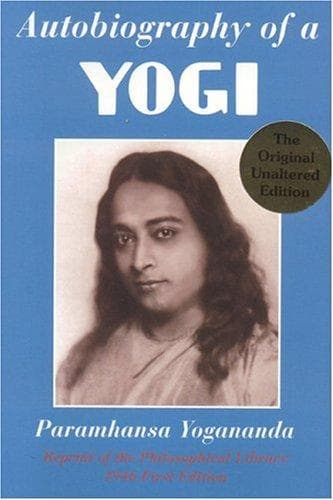
Yogananda, Paramahansa, 1893-1952; Yogis -- India -- Biography
The characteristic features of Indian culture have long been
a search for ultimate verities and the concomitant disciple-guru
{FN1-2} relationship. My own path led me to a Christlike sage whose
beautiful life was chiseled for the ages. He was one of the great
masters who are India’s sole remaining wealth. Emerging in every
generation, they have bulwarked their land against the fate of
Babylon and Egypt.
I find my earliest memories covering the anachronistic features of
a previous incarnation. Clear recollections came to me of a distant
life, a yogi {FN1-3} amidst the Himalayan snows. These glimpses of
the past, by some dimensionless link, also afforded me a glimpse
of the future.
The helpless humiliations of infancy are not banished from my mind.
I was resentfully conscious of not being able to walk or express
myself freely. Prayerful surges arose within me as I realized
my bodily impotence. My strong emotional life took silent form as
words in many languages. Among the inward confusion of tongues,
my ear gradually accustomed itself to the circumambient Bengali
syllables of my people. The beguiling scope of an infant’s mind!
adultly considered limited to toys and toes.
Psychological ferment and my unresponsive body brought me to many
obstinate crying-spells. I recall the general family bewilderment
at my distress. Happier memories, too, crowd in on me: my mother’s
caresses, and my first attempts at lisping phrase and toddling
step. These early triumphs, usually forgotten quickly, are yet a
natural basis of self-confidence.
My far-reaching memories are not unique. Many yogis are known
to have retained their self-consciousness without interruption by
the dramatic transition to and from “life” and “death.” If man be
solely a body, its loss indeed places the final period to identity.
But if prophets down the millenniums spake with truth, man is
essentially of incorporeal nature. The persistent core of human
egoity is only temporarily allied with sense perception.
Although odd, clear memories of infancy are not extremely rare. During
travels in numerous lands, I have listened to early recollections
from the lips of veracious men and women.
I was born in the last decade of the nineteenth century, and passed
my first eight years at Gorakhpur. This was my birthplace in the
United Provinces of northeastern India. We were eight children: four
boys and four girls. I, Mukunda Lal Ghosh {FN1-4}, was the second
son and the fourth child.
Father and Mother were Bengalis, of the KSHATRIYA caste. {FN1-5} Both
were blessed with saintly nature. Their mutual love, tranquil and
dignified, never expressed itself frivolously. A perfect parental
harmony was the calm center for the revolving tumult of eight young
lives.
Public-domain text, read in full here on John Shaqi.
Reviews
Reviews
No reviews yet
Be the first to share your thoughts on this work.
Join the Discussion
Join the discussion
Sign in to leave a comment or review.
Sign InorCreate an account