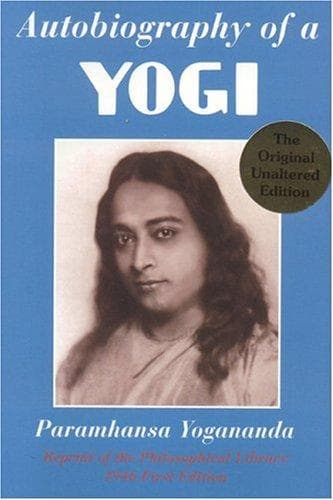
Yogananda, Paramahansa, 1893-1952; Yogis -- India -- Biography
Father tended to first say “No” to any new proposal. His attitude
toward the strange woman who so readily enlisted Mother’s sympathy
was an example of his customary caution. Aversion to instant
acceptance—typical of the French mind in the West-is really only
honoring the principle of “due reflection.” I always found Father
reasonable and evenly balanced in his judgments. If I could bolster
up my numerous requests with one or two good arguments, he invariably
put the coveted goal within my reach, whether it were a vacation
trip or a new motorcycle.
[Illustration: MY FATHER, Bhagabati Charan Ghosh, A Disciple of
Lahiri Mahasaya—see father1.jpg]
Father was a strict disciplinarian to his children in their early
years, but his attitude toward himself was truly Spartan. He
never visited the theater, for instance, but sought his recreation
in various spiritual practices and in reading the BHAGAVAD GITA.
{FN1-7} Shunning all luxuries, he would cling to one old pair of
shoes until they were useless. His sons bought automobiles after
they came into popular use, but Father was always content with the
trolley car for his daily ride to the office. The accumulation of
money for the sake of power was alien to his nature. Once, after
organizing the Calcutta Urban Bank, he refused to benefit himself
by holding any of its shares. He had simply wished to perform a
civic duty in his spare time.
Several years after Father had retired on a pension, an English
accountant arrived to examine the books of the Bengal-Nagpur Railway
Company. The amazed investigator discovered that Father had never
applied for overdue bonuses.
“He did the work of three men!” the accountant told the company.
“He has rupees 125,000 (about $41,250.) owing to him as back
compensation.” The officials presented Father with a check for
this amount. He thought so little about it that he overlooked any
mention to the family. Much later he was questioned by my youngest
brother Bishnu, who noticed the large deposit on a bank statement.
“Why be elated by material profit?” Father replied. “The one who
pursues a goal of evenmindedness is neither jubilant with gain
nor depressed by loss. He knows that man arrives penniless in this
world, and departs without a single rupee.”
Early in their married life, my parents became disciples of a
great master, Lahiri Mahasaya of Benares. This contact strengthened
Father’s naturally ascetical temperament. Mother made a remarkable
admission to my eldest sister Roma: “Your father and myself live
together as man and wife only once a year, for the purpose of having
children.”
Father first met Lahiri Mahasaya through Abinash Babu, {FN1-8}
an employee in the Gorakhpur office of the Bengal-Nagpur Railway.
Abinash instructed my young ears with engrossing tales of many Indian
saints. He invariably concluded with a tribute to the superior
glories of his own guru.
Public-domain text, read in full here on John Shaqi.
Reviews
Reviews
No reviews yet
Be the first to share your thoughts on this work.
Join the Discussion
Join the discussion
Sign in to leave a comment or review.
Sign InorCreate an account