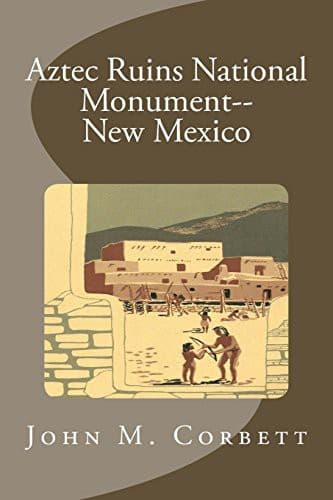
Aztec Ruins National Monument, New MexicoCorbett, John M. (John Maxwell)
History
Aztec Ruins National Monument, New Mexico
Corbett, John M. (John Maxwell)
Aztec Ruins National Monument (N.M.)
Ten thousand years ago, a small band of weary, footsore, hungry hunters
cautiously approached a few bison which they had managed to stampede
away from the main herd. Ten in number, the bison had finally paused to
drink at a small spring in a rincon of the canyon wall and to graze upon
the thick, tall grass. For a day and a half, the hunters had carefully
followed the large, hairy mammals, hoping the beasts would lose their
sense of danger and allow themselves to be boxed into a place where the
hunters could approach close enough to kill them.
At last the moment was at hand! Warily, two hunters crawled along the
slope of the canyon wall from opposite sides, seeking places from which
they could throw large rocks upon the animals or hurl their spears with
devastating force. Patiently five more hunters waited below, concealed
by the tall grass or behind convenient boulders. When the first two were
in place, the leader gave the signal. Rocks came crashing down on the
startled bison; spears whistled through the air and thudded into soft
flesh; one or two missed, but most found their targets. Shouts and cries
filled the air. The bison, caught by surprise, whirled and milled around
the waterhole for a moment, then several broke for the open country. One
was wounded, the spear in its flank bobbing like a wave-tossed spindle.
On this animal the hunters concentrated; three more spears found their
target, and the great beast went down thrashing wildly. Two other
animals lay maimed at the waterhole; one young calf, hobbling painfully,
tried to get away to the open country but was quickly dispatched. The
remaining six bison disappeared through the thickets and tall grass to
the west.
The animals which were down but not dead were swiftly killed with spear
thrusts through the eyes. Then the assembled hunters fell to the most
important task of all. With quick strokes of their razor-sharp stone
knives, they carefully peeled away the hide from one of the carcasses.
The soft inner parts—the heart, kidneys, and liver—they immediately cut
into pieces and ate raw on the spot, for they had not tasted meat for
many days. In fact, for the last several days on the hunt, they had
subsisted entirely on the few edible plants and roots they could easily
find while tracking the bison. Now great chunks of meat were cut from
the flanks and likewise consumed raw, until each hunter could eat no
more. Then the men gathered up their weapons—long wooden spears with
carefully made chipped flint or obsidian points. Some of the points were
so deeply buried in the bodies that they broke loose from the shafts
when the men tried to pry them free. Other shafts had broken, leaving
the points embedded when the bison thrashed about trying to escape the
sudden devastation. This was of minor concern—new shafts could be made,
new points fashioned. It was more important that once again there was
meat enough to go around for the hunters, their mates, and their
children.
Public-domain text, read in full here on John Shaqi.
Reviews
Reviews
No reviews yet
Be the first to share your thoughts on this work.
Join the Discussion
Join the discussion
Sign in to leave a comment or review.
Sign InorCreate an account