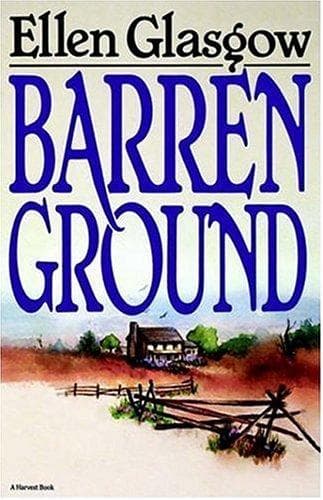
Country life -- Fiction; Pastoral fiction; Piedmont (U.S. : Region) -- Fiction; Virginia -- Fiction
"It was too much, I suppose, to expect you to understand how I failed. I
never ran after women. That wasn't my weakness. I never wanted to do any
of the things I did. I never wanted to throw you over. I never wanted to
marry Geneva. I never wanted to ruin either of your lives. I never
wanted to stay in this God-forsaken solitude. I never wanted to let
drink get a hold on me. I did not want to do a single one of these
things; but I did them, every one. And you will never understand how
that could be."
She shook her head. "It doesn't matter now. It isn't worth thinking
about."
"All the same I wish you could understand that I was not the kind of man
to do the things that I did. I was a different sort of fellow entirely.
But what I was never seemed strong enough to withstand the pull of what
I was not. Of course, you'll never see that. You'll just go on thinking
I was born rotten inside. Perhaps you're right. I don't know. I can't
work it out."
She looked through him and beyond him to the brown solitude of the
winter fields. The sunken roads were swimming in melted snow; the bushes
were like soaked rags; the trees were dripping with a fluid moisture
which was heavier than rain. From the sodden ground a vapour steamed up
and floated like a miasma on the motionless air.
"Men like you ought to have been sent to the war," she said. "They
wouldn't take me. I was too old, and besides I've got the drink habit."
"And you blame somebody else for that, I suppose?"
"No, I don't blame anybody. I don't blame anybody for anything. Least of
all myself. It was the way things turned out. Strange as it may seem to
you, I always did the best that I could. If Father had died sooner, it
might have been different. But everything happened too late. The
broomsedge grew over me before I could get away."
Exultation flared up and then died down to ashes. "You ruined Five Oaks,
and I saved it," she said.
"Yes, you have done well with the farm." Twenty-five years of toil and
self-denial, and in the end only: "You have done well with the farm!"
"That shows what you can do even with poor land when you put your heart
into it," he added.
"Not the heart, but the head," she retorted sharply, as she went past
him into the cabin.
VI
When the spring came and the epidemic was over, she had won the loyal
friendship of the poorer tenant farmers and the negro landowners; but
her energy and her resilience were less than they had ever been in her
life.
Public-domain text, read in full here on John Shaqi.
Reviews
Reviews
No reviews yet
Be the first to share your thoughts on this work.
Elsewhere in the archive
Join the Discussion
Join the discussion
Sign in to leave a comment or review.
Sign InorCreate an account