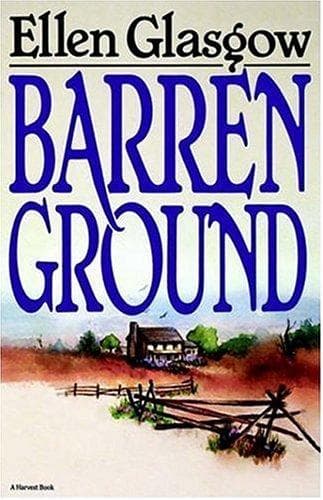
Country life -- Fiction; Pastoral fiction; Piedmont (U.S. : Region) -- Fiction; Virginia -- Fiction
"I'll put this stick by your bed." She went out into the hall and came
back with one of John Abner's hickory sticks. "If you want anything or
feel nervous, knock on the wall. I am a light sleeper, and Mirandy is in
the room off the kitchen."
She waited, but he did not answer. Had he understood her, or was he
incapable of grasping the meaning of sounds? It was like the
inconsistency of life, she thought, that he, who once had been so
voluble, should have become almost inarticulate at the end. She knew
that he was trying to give as little trouble as possible, yet he seemed
unable to put his wish into words.
Before going out, she made one last effort with the embers, but the wood
she threw into the fireplace did not catch. When she went over to the
bed again, Jason was lying with closed eyes. "He doesn't look as if he
could last much longer," she thought dispassionately.
The still October days drifted by, hazy, mellow, declining into the rich
light of the sunsets. With the dry weather and sufficient food after
starvation, Jason appeared to improve. The old wheel-chair which had once
belonged to Rose Emily was brought down from the attic, and he sat out,
muffled in rugs, on bright afternoons. He liked his meals, though he
never asked for them. Sometimes, after a hard spell of coughing, he
would say, "How long is it before I have my eggnog?"; yet he never
attempted to hasten the hour. Twice, after a severe hæmorrhage, they
believed he was dying, but he recovered and was wheeled out again on the
lawn. Day after day, he sat there in the sunshine, passive, silent,
wrapped in a curious remoteness which was like the armour of an
inscrutable reserve. Yet it was not reserve, she felt instinctively. It
was something thinner; vaguer, something as impalpable as a shadow. It
was, she realized suddenly one day, an emptiness of spirit. He was
silent because there was nothing left in him to be uttered. He was
remote because he had lost all connection with his surroundings, with
events, with the material structure of living. Through the autumn days
he would sit there, propped on pillows, in his wheel-chair between the
half-bared lilac bushes and the "rockery," where Mrs. Oakley had planted
portulaca over an old stump. His head would sink down into the rugs, and
his unseeing eyes would gaze up the road to the starry fields of the
life-everlasting. Behind him there was the porch and the long grey roof
where swallows were wheeling. From the locust trees by the wings a rain
of small yellow leaves fell slowly and steadily in the windless air,
turning once as they left the stem, and drifting down to the flagged
walk and the borders of sheepmint and wire-grass. His figure, bowed
under the rugs, seemed to her to become merely another object in the
landscape. He was as inanimate as the fields or the trees; and yet he
made the solitude more lonely and the autumn dreaminess more pensive.
His features had the scarred and seared look that is left in the faces
Public-domain text, read in full here on John Shaqi.
Reviews
Reviews
No reviews yet
Be the first to share your thoughts on this work.
Elsewhere in the archive
Join the Discussion
Join the discussion
Sign in to leave a comment or review.
Sign InorCreate an account