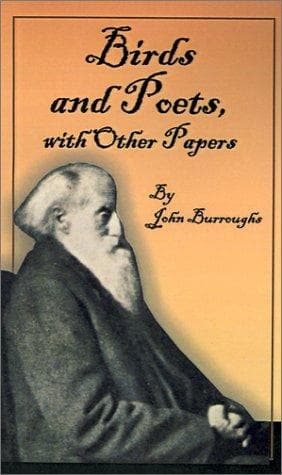
Birds and Poets : with Other PapersBurroughs, John
History
Birds and Poets : with Other Papers
Burroughs, John
American essays -- 19th century; Birds; Natural history -- Outdoor books; Nature
I experienced the same emotion when I saw them go by with the sunken
steamer. The procession moved slowly and solemnly. It was like a funeral
cortege,--a long line of grim floats and barges and boxes, with their
bowed and solemn derricks, the pall-bearers; and underneath in her
watery grave, where she had been for six months, the sunken steamer,
partially lifted and borne along. Next day the procession went back
again, and the spectacle was still more eloquent. The steamer had been
taken to the flats above and raised till her walking-beam was out of
water; her bell also was exposed and cleaned and rung, and the wreckers'
Herculean labor seemed nearly over. But that night the winds and the
storms held high carnival. It looked like preconcerted action on the
part of tide, tempest, and rain to defeat these wreckers, for the
elements all pulled together and pulled till cables and hawser snapped
like threads. Back the procession started, anchors were dragged or lost,
immense new cables were quickly taken ashore and fastened to trees; but
no use: trees were upturned, the cables stretched till they grew
small and sang like harp-strings, then parted; back, back against the
desperate efforts of the men, till within a few feet of her old
grave, when there was a great commotion among the craft, floats were
overturned, enormous chains parted, colossal timbers were snapped
like pipestems, and, with a sound that filled all the air, the steamer
plunged to the bottom again in seventy feet of water.
VIII
I am glad to observe that all the poetry of the midsummer harvesting has
not gone out with the scythe and the whetstone. The line of mowers was a
pretty sight, if one did not sympathize too deeply with the human backs
turned up there to the sun, and the sound of the whetstone, coming up
from the meadows in the dewy morning, was pleasant music. But I find the
sound of the mowing-machine and the patent reaper is even more in tune
with the voices of Nature at this season. The characteristic sounds of
midsummer are the sharp, whirring crescendo of the cicada or harvest
fly, and the rasping, stridulous notes of the nocturnal insects. The
mowing-machine repeats and imitates these sounds. 'T is like the hum of
a locust or the shuffling of a mighty grasshopper. More than that, the
grass and the grain at this season have become hard. The timothy stalk
is like a file; the rye straw is glazed with flint; the grasshoppers
snap sharply as they fly up in front of you; the bird-songs have ceased;
the ground crackles under foot; the eye of day is brassy and merciless;
and in harmony with all these things is the rattle of the mower and the
hay-tedder.
IX
Public-domain text, read in full here on John Shaqi.
Reviews
Reviews
No reviews yet
Be the first to share your thoughts on this work.
Join the Discussion
Join the discussion
Sign in to leave a comment or review.
Sign InorCreate an account