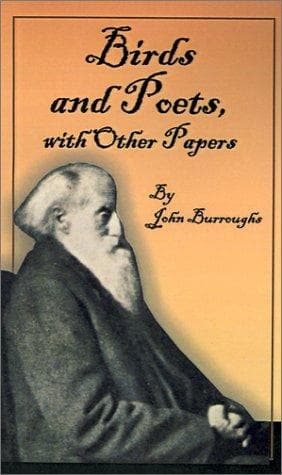
Birds and Poets : with Other PapersBurroughs, John
History
Birds and Poets : with Other Papers
Burroughs, John
American essays -- 19th century; Birds; Natural history -- Outdoor books; Nature
'T is an evidence of how directly we are related to Nature, that we more
or less sympathize with the weather, and take on the color of the day.
Goethe said he worked easiest on a high barometer. One is like a chimney
that draws well some days and won't draw at all on others, and the
secret is mainly in the condition of the atmosphere. Anything positive
and decided with the weather is a good omen. A pouring rain may be more
auspicious than a sleeping sunshine. When the stove draws well, the fogs
and fumes will leave your mind. I find there is great virtue in the bare
ground, and have been much put out at times by those white angelic
days we have in winter, such as Whittier has so well described in these
lines:--
"Around the glistening wonder bent
The blue walls of the firmament;
No cloud above, no earth below,
A universe of sky and snow."
On such days my spirit gets snow-blind; all things take on the same
color, or no color; my thought loses its perspective; the inner world is
a blank like the outer, and all my great ideals are wrapped in the same
monotonous and expressionless commonplace. The blackest of black days
are better.
Why does snow so kill the landscape and blot out our interest in it? Not
merely because it is cold, and the symbol of death,--for I imagine as
many inches of apple blossoms would have about the same effect,--but
because it expresses nothing. White is a negative; a perfect blank. The
eye was made for color, and for the earthy tints, and, when these are
denied it, the mind is very apt to sympathize and to suffer also.
Then when the sap begins to mount in the trees, and the spring languor
comes, does not one grow restless indoors? The sun puts out the fire,
the people say, and the spring sun certainly makes one's intellectual
light grow dim. Why should not a man sympathize with the seasons and the
moods and phases of Nature? He is an apple upon this tree, or rather he
is a babe at this breast, and what his great mother feels affects him
also.
X
I have frequently been surprised, in late fall and early winter, to
see how unequal or irregular was the encroachment of the frost upon the
earth. If there is suddenly a great fall in the mercury, the frost lays
siege to the soil and effects a lodgment here and there, and extends its
conquests gradually. At one place in the field you can easily run your
staff through into the soft ground, when a few rods farther on it will
be as hard as a rock. A little covering of dry grass or leaves is a
great protection. The moist places hold out long, and the spring runs
never freeze. You find the frost has gone several inches into the plowed
ground, but on going to the woods, and poking away the leaves and debris
under the hemlocks and cedars, you find there is no frost at all. The
Earth freezes her ears and toes and naked places first, and her body
last.
Public-domain text, read in full here on John Shaqi.
Reviews
Reviews
No reviews yet
Be the first to share your thoughts on this work.
Join the Discussion
Join the discussion
Sign in to leave a comment or review.
Sign InorCreate an account