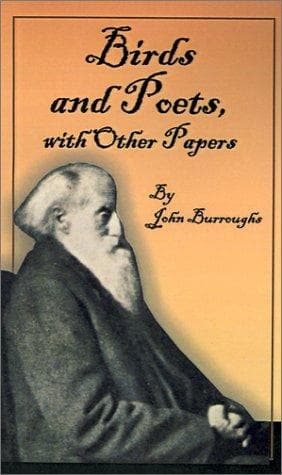
Birds and Poets : with Other PapersBurroughs, John
History
Birds and Poets : with Other Papers
Burroughs, John
American essays -- 19th century; Birds; Natural history -- Outdoor books; Nature
There is something almost pathetic in the fact that the birds remain
forever the same. You grow old, your friends die or move to distant
lands, events sweep on, and all things are changed. Yet there in your
garden or orchard are the birds of your boyhood, the same notes, the
same calls, and, to all intents and purposes, the identical birds
endowed with perennial youth. The swallows, that built so far out of
your reach beneath the eaves of your father's barn, the same ones now
squeak and chatter beneath the eaves of your barn. The warblers and
shy wood-birds you pursued with such glee ever so many summers ago, and
whose names you taught to some beloved youth who now, perchance, sleeps
amid his native hills, no marks of time or change cling to them; and
when you walk out to the strange woods, there they are, mocking you with
their ever-renewed and joyous youth. The call of the high-holes, the
whistle of the quail, the strong piercing note of the meadowlark, the
drumming of the grouse,--how these sounds ignore the years, and strike
on the ear with the melody of that springtime when the world was young,
and life was all holiday and romance!
During any unusual tension of the feelings or emotions, how the note or
song of a single bird will sink into the memory, and become inseparably
associated with your grief or joy! Shall I ever again be able to hear
the song of the oriole without being pierced through and through? Can it
ever be other than a dirge for the dead to me? Day after day, and week
after week, this bird whistled and warbled in a mulberry by the door,
while sorrow, like a pall, darkened my day. So loud and persistent was
the singer that his note teased and worried my excited ear.
"Hearken to yon pine warbler,
Singing aloft in the tree!
Hearest thou, O traveler!
What he singeth to me?
"Not unless God made sharp thine ear
With sorrow such as mine,
Out of that delicate lay couldst thou
Its heavy tale divine."
It is the opinion of some naturalists that birds never die what is
called a natural death, but come to their end by some murderous or
accidental means; yet I have found sparrows and vireos in the fields and
woods dead or dying, that bore no marks of violence; and I remember that
once in my childhood a redbird fell down in the yard exhausted, and was
brought in by the girl; its bright scarlet image is indelibly stamped
upon my recollection. It is not known that birds have any distempers
like the domestic fowls, but I saw a social sparrow one day quite
disabled by some curious malady that suggested a disease that sometimes
attacks poultry; one eye was nearly put out by a scrofulous-looking
sore, and on the last joint of one wing there was a large tumorous or
fungous growth that crippled the bird completely. On another occasion
I picked up one that appeared well, but could not keep its centre of
gravity when in flight, and so fell to the ground.
Public-domain text, read in full here on John Shaqi.
Reviews
Reviews
No reviews yet
Be the first to share your thoughts on this work.
Join the Discussion
Join the discussion
Sign in to leave a comment or review.
Sign InorCreate an account