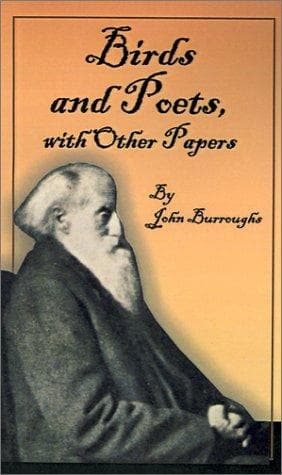
Birds and Poets : with Other PapersBurroughs, John
History
Birds and Poets : with Other Papers
Burroughs, John
American essays -- 19th century; Birds; Natural history -- Outdoor books; Nature
"Bacon," he says, "is a producer of conceptions and of sentences. The
matter being explored, he says to us: 'Such it is; touch it not on that
side; it must be approached from the other.' Nothing more; no proof, no
effort to convince; he affirms, and nothing more; he has thought in the
manner of artists and poets, and he speaks after the manner of prophets
and seers. 'Cogita et visa,'--this title of one of his books might be
the title of all. His process is that of the creators; it is intuition,
not reasoning.... There is nothing more hazardous, more like fantasy,
than this mode of thought when it is not checked by natural and good
strong common sense. This common sense, which is a kind of natural
divination, the stable equilibrium of an intellect always gravitating
to the true, like the needle to the north pole, Bacon possesses in the
highest degree. He has a preeminently practical, even an utilitarian
mind."
It is significant, and is indeed the hidden seed or root out of which
comes the explanation of much, if not the main part, of his life and
writings, that Emerson comes of a long line of clergymen; that the blood
in his veins has been teaching, and preaching, and thinking, and
growing austere, these many generations. One wonders that it is still so
bounding and strong, so red with iron and quick with oxygen. But in
him seems to be illustrated one of those rare cases in the genealogy
of families where the best is carried forward each time, and steadily
recruited and intensified. It does not seem possible for any man to
become just what Emerson is from the stump, though perhaps great men
have been the fruit of one generation; but there is a quality in him, an
aroma of fine manners, a propriety, a chivalry in the blood, that dates
back, and has been refined and transmitted many times. Power is born
with a man, and is always first hand, but culture, genius, noble
instincts, gentle manners, or the easy capacity for these things, may
be, and to a greater or a lesser extent are, the contribution of the
past. Emerson's culture is radical and ante-natal, and never fails him.
The virtues of all those New England ministers and all those tomes of
sermons are in this casket. One fears sometimes that he has been too
much clarified, or that there is not enough savage grace or original
viciousness and grit in him to save him. How he hates the roysterers,
and all the rank, turbulent, human passions, and is chilled by the
thought that perhaps after all Shakespeare led a vulgar life!
Public-domain text, read in full here on John Shaqi.
Reviews
Reviews
No reviews yet
Be the first to share your thoughts on this work.
Elsewhere in the archive
Join the Discussion
Join the discussion
Sign in to leave a comment or review.
Sign InorCreate an account