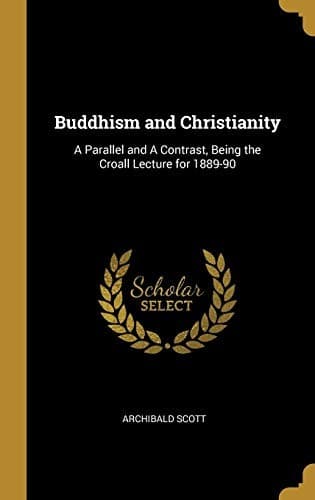
Buddhism and Christianity: A Parallel and a ContrastScott, Archibald
Religion
Buddhism and Christianity: A Parallel and a Contrast
Scott, Archibald
Buddhism -- Relations -- Christianity; Christianity and other religions -- Buddhism
But like all unnatural segregations of human beings from society, for
which man was made, Monachism everywhere became eventually an excuse for
indolence and misanthropy; a refuge for the melancholy, and for all who
had become unfit to serve either the world or the Church. Its whole
history in the Christian Church has justified the warning of St. Paul
against artificial methods of attaining to saintliness. The vices which
beset society never lost any of their power over the recluses of the
desert or the inmates of the monastery, while many other vices were
added to the host that assailed the solitary, undefended by his
fellows.[261] “Woe to him that is alone, for when he falls there is not
another to raise him up! Woe to him that is alone, for there is no one
to keep him from falling!” are the lessons of this long mistaken attempt
to realise an undemanded standard of excellence; and yet, just because
of the consistency of its ideal with one side of Christian service,
modern Christendom, though in altered and modified forms, has not parted
with Monachism yet.
“The ideal of the Christian monk,” says Montalembert, “is that of
manhood in its purest and most energetic form—manhood intellectually and
morally superior, devoting itself to efforts greater and more sustained
than are exacted in a worldly career; and this not to make earthly
service a stepping-stone to heaven, but of life a long series of
victories for man.”[262] Surely this is the ideal of every Christian
minister truly consecrated to the service of man; yea, the ideal of
every brother or sister who, married or single, in business or society,
is trying to reach forward to the mark of our high calling. There is no
code of disabilities in the service of Christ, and the way to the
highest honours is open to all who wish to enter it, of whatever
condition or rank or mental capacity they may be. When this common ideal
was fallen from in the monastic orders, it was being realised by many
private members of the Church; when the professional Church had
falsified it, it was being upheld by so-called “men of the world”; and
therefore, as a natural consequence, when the monastic orders of
Christendom became corrupt, society, true to its better instincts, rose
up and reformed them or swept them away. There was always a large volume
of life outside the particular channel which these orders filled, to
purify it when it became foul, or to force it onward, when stagnant,
into the life of the Church.
Public-domain text, read in full here on John Shaqi.
Reviews
Reviews
No reviews yet
Be the first to share your thoughts on this work.
Elsewhere in the archive
Join the Discussion
Join the discussion
Sign in to leave a comment or review.
Sign InorCreate an account