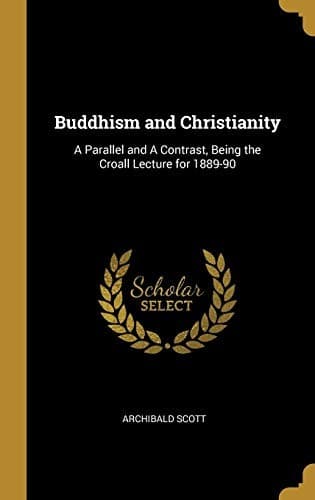
Buddhism and Christianity: A Parallel and a ContrastScott, Archibald
Religion
Buddhism and Christianity: A Parallel and a Contrast
Scott, Archibald
Buddhism -- Relations -- Christianity; Christianity and other religions -- Buddhism
All that we know of Buddhism, and all that we are likely to know of it,
is to be gathered from its own Scriptures; and a comparison of these
with the Christian Scriptures reveals at the very outset a difference
amounting to a vast contrast between them. The original Scriptures of
Christianity have been before the tribunal of the world’s keenest and
most hostile criticism for 1800 years; but we are only now beginning to
make the acquaintance of the Scriptures of Buddhism, which have hardly
been subjected to any cross-questioning worthy of the name. Those who
have ventured to assail have only published their inability to
understand them, and those most competent to criticise may be pardoned
if they handle tenderly the fragments which they are collecting and
translating for our use. The services which they are thus rendering to
religion as well as to science are very great. Previously we had only
anthologies extracted often without reference to date or authorship or
connection to judge from, but now these learned pundits are furnishing
us with books containing not only the wisdom and beauties of Eastern
literature, but its follies and blemishes as well. Omitting only what is
obscene and offensive to the moral sense,[63] they are giving us
specimens of several strata of Oriental thought and belief, vertically
and thoroughly cut, from which a correct understanding of the essential
features of this very peculiar religion may with considerable
probability be ascertained.
Only a portion of the Buddhist Scriptures are as yet available, and
these we are certainly not at liberty to place side by side as of equal
evidential value with the contents of the New Testament. It is said that
two thousand manuscripts of the New Testament, or of portions of it,
have been discovered, several of which are of great antiquity, and
notwithstanding the immense number of various readings on points of
detail, the text of the oldest corresponds substantially with that of
the books as we have them to-day. We are informed, however, on the best
authority, that “all Indian manuscripts are comparatively modern, that
no manuscript written one thousand years ago is now existent in India,
and that it is almost impossible to find one written five hundred years
ago; for most manuscripts which claim to be of that date are merely
copies of old ones, the dates of which are repeated by the
copyists.”[64] It is admitted, moreover, that the literary honesty of
these Indian translators and copyists is very questionable, that the
books of the Buddhists have undergone wholesale textual alterations,
that none of the Sanskrit works as yet known to us are unadulterated
specimens of transmitted doctrines, that the oldest and most reliable
authorities for the life of Buddha exaggerate greatly events which are
said to have happened, and ascribe to him long discourses of which the
writers themselves were the composers.[65] In respect, therefore, of
Public-domain text, read in full here on John Shaqi.
Reviews
Reviews
No reviews yet
Be the first to share your thoughts on this work.
Join the Discussion
Join the discussion
Sign in to leave a comment or review.
Sign InorCreate an account