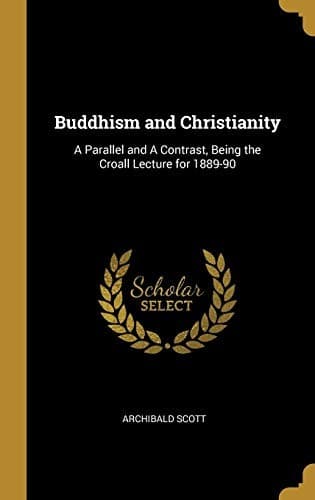
Buddhism and Christianity: A Parallel and a ContrastScott, Archibald
Religion
Buddhism and Christianity: A Parallel and a Contrast
Scott, Archibald
Buddhism -- Relations -- Christianity; Christianity and other religions -- Buddhism
Another indication of the change that is coming over the world is the
attitude which Christian divines now assume toward other religions.
Fifty years ago the attempt to compare our Bible and our Creed with the
scriptures of other religions would have been regarded as a sacrilegious
surrender of what was holy to the dogs. This was due not so much to
prejudice on the part of the expounders of Christianity as to aversion
to the avowedly anti-christian spirit in which these researches were
prosecuted. The Comparative method was then frequently employed, as it
had been by the Encyclopædists of last century, for the purpose of
discrediting and degrading Christianity. The conclusion was often
foregone before the process began; and so it was natural that reverent
but timid minds jealous for their religion, and anxious to guard it from
insult, should decline such encounters. Now, however, orthodox
theologians are quite aware that in this matter they have to reckon with
other than the professed enemies of Christianity. The ablest advocates
of Comparative Theology are not only free from antichristian prejudice,
but they protest against it as inimical to the science itself.[4] It is
not infidelity, but Providence, that is forcing us to investigate the
origin of our religion, and to search its scriptures in the fuller light
which we now enjoy. We are being divinely taught that we cease to revere
a heavenly gift the moment we begin to idolise it; that the disposition
most fatal to ourselves, most dishonouring to our religion, is that
which would regard its scriptures as charmed relics too sacred to be
examined, and only to be brought by an undevout and apostate Church, in
the moment of its extreme peril, into the field of battle with the
Philistines. To shrink from the comparison of our Faith with the
religious beliefs of those whom we acknowledge to be bone of our bone,
and flesh of our flesh, is to manifest a cowardly lack of confidence in
its Author. It is at the judgment-bar of all the ages that He means to
make good His claim to be the Judge of all mankind. The more He is
tried, the more will His authority be confessed to be divine. He
certainly invited inspection and comparison, and He may have had other
than Hebrew scriptures in His view when He instructed us to “search
them, for they testify of Me.”[5]
Public-domain text, read in full here on John Shaqi.
Reviews
Reviews
No reviews yet
Be the first to share your thoughts on this work.
Join the Discussion
Join the discussion
Sign in to leave a comment or review.
Sign InorCreate an account